(347) 625-1246
 hello@brooklynchirocare.com
 112 Greenpoint Ave #1B, Brooklyn, NY 11222
You used to grab things off the top shelf without thinking about it. Now that simple motion sends a sharp sting through your shoulder, and you’re rearranging your whole day around it. If that sounds familiar, you’re not alone. Shoulder pain in Greenpoint is more common than you’d think, and it’s one of the top reasons patients walk into our clinic, here’s what you should know: most shoulder problems don’t need surgery. They need the right diagnosis and a treatment plan that targets the actual cause, not just the symptoms.
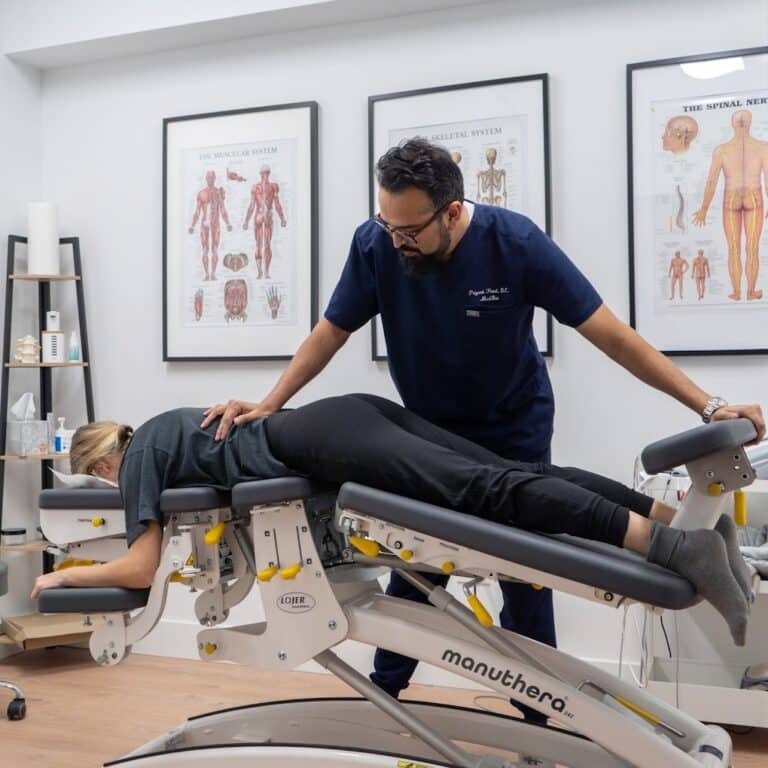
At Brooklyn Chiropractic Care in Greenpoint, Dr. Patel sees shoulder pain patients every single day. It’s one of the most common reasons people walk into our clinic, and it responds incredibly well to conservative, hands-on care.
Key Takeaways
- Most shoulder pain comes from soft tissue problems like rotator cuff strains or impingement, not structural damage that requires surgery
- Chiropractic treatment addresses the root cause of your pain, not just the symptoms
- You’ll likely notice improvement within the first 2-4 visits
- Simple home exercises can speed your recovery and help prevent future flare-ups
- A full exam, including your neck and upper back, is critical for getting the diagnosis right
In This Article
What Is Shoulder Pain?
this is any discomfort, aching, or sharp sensation in or around the shoulder joint. Your shoulder is the most mobile joint in your body, and that freedom of movement comes at a cost. It relies on a complex group of muscles, tendons, and ligaments to stay stable. When any of those structures get irritated or damaged, you feel it fast.
Here’s what makes shoulder pain tricky. The pain you feel in your shoulder doesn’t always start there. Problems in your neck, upper back, or thoracic spine can send pain directly into your shoulder. That’s why Dr. Patel always examines the full chain of movement, not just the spot that hurts.
In our Greenpoint clinic, we see shoulder pain from weekend basketball games, hours at a desk, carrying heavy bags up apartment stairs, and everything in between. Sound familiar?
What Causes Shoulder Pain?
Rotator cuff irritation is the most common cause of shoulder pain, whether it’s a strain, tendinitis, or impingement [1]. But there are several other problems that bring patients to our office.
Rotator Cuff Injuries
Your rotator cuff is a group of four muscles and tendons that stabilize the shoulder joint. Repetitive overhead movements, sudden injuries, or normal age-related wear can strain or tear these tissues. You’ll typically feel a dull ache deep in the shoulder that gets worse when you reach overhead or behind your back.
Shoulder Impingement
This happens when the tendons in your shoulder get pinched between the bones during movement. It’s almost always an overuse injury and extremely common in people who do repetitive overhead work or sports [2]. The hallmark sign? A sharp pain when lifting your arm to the side or above your head.
Frozen Shoulder
If your shoulder is getting progressively stiffer over weeks or months, frozen shoulder (adhesive capsulitis) might be the culprit. The capsule around the joint thickens and tightens, restricting movement. It’s more common after age 40 and in people recovering from an injury that kept the shoulder immobile for a while.
Poor Posture and Desk Work
Spending hours hunched over a keyboard rounds your shoulders forward and creates muscle imbalances that put extra stress on the shoulder joint. One pattern we notice with our Brooklyn patients: the pain doesn’t start overnight. It builds for months before it finally gets bad enough to deal with. If that sounds like you, take a look at our guide on posture-related neck and shoulder pain.
Referred Pain from the Spine
Neck or upper back misalignments can irritate the nerves that travel into your shoulder. This is one of the most overlooked causes of shoulder pain and one of the biggest reasons a chiropractor should evaluate your spine when you’re dealing with shoulder problems.
How a Shoulder Pain Chiropractor Treats the Problem
Chiropractic treatment for shoulder pain focuses on correcting the underlying problem, not covering it up with medication. Here’s what treatment at Brooklyn Chiropractic Care typically looks like.
A Thorough Assessment
Dr. Patel starts with a detailed exam. He’ll test your range of motion, identify which movements trigger pain, assess your posture, and check your cervical and thoracic spine. If needed, we can take digital X-rays right here in our office to rule out fractures or structural issues.
Chiropractic Adjustments
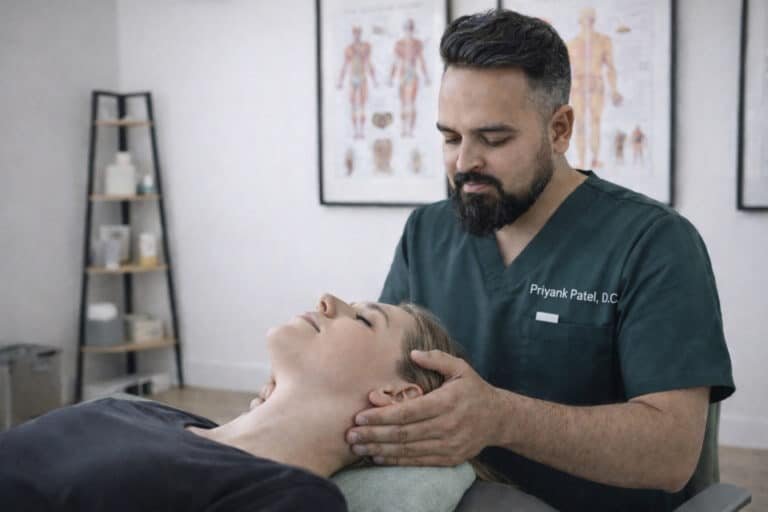
Gentle, targeted chiropractic adjustments to the shoulder joint, cervical spine, and thoracic spine restore proper alignment and take pressure off irritated nerves and soft tissues. Research shows that spinal manipulation combined with exercise produces significant improvements in shoulder pain and function [3].
Soft Tissue Therapy
Manual techniques like myofascial release and trigger point therapy break up adhesions in the muscles around the shoulder. This reduces tension, improves blood flow, and helps the tissue heal faster. Dr. Patel frequently tells patients that the adjustment gets things moving, but the soft tissue work is what helps them stay that way.
Rehabilitation Exercises
You’ll get a personalized set of exercises designed to strengthen weak muscles and stretch tight ones. This is the part that prevents the problem from coming back. We’ll teach you exactly how to do each movement so you can continue your recovery at home between visits.
Shockwave Therapy for Chronic Cases
For discomfort that hasn’t responded to other treatments, we offer radial shockwave therapy. It sends acoustic waves into the affected tissue to stimulate healing and reduce calcification. It’s especially effective for calcific tendinitis and chronic rotator cuff problems.
What to Expect at Your First Visit
Your first appointment takes about 45 minutes. Dr. Patel will ask about your pain history, what makes it better or worse, and how it’s affecting your daily routine. Then he’ll do a hands-on exam that includes range of motion testing, orthopedic tests specific to the shoulder, and a postural assessment.
If your exam findings point to a soft tissue injury or joint dysfunction, you’ll typically start treatment on that first visit. That might include an adjustment, soft tissue therapy, or both. Most patients leave that first appointment with noticeably less pain and a clear plan for the visits ahead.
Ever wonder how many visits you’ll need? It depends on the cause and severity. Mild shoulder impingement might resolve in 4-6 visits over 2-3 weeks. More complex rotator cuff problems may need 8-12 visits over 6-8 weeks. Dr. Patel will give you an honest timeline from the start so there aren’t surprises.
What You Can Do at Home
Treatment in the office works best when you pair it with smart habits at home. Here are five things you can start today.
- Ice for the first 48-72 hours. Wrap an ice pack in a towel and apply it to your shoulder for 15-20 minutes, 3-4 times a day. This reduces inflammation and numbs the pain. After the acute phase passes, you can switch to heat.
- Pendulum stretches. Lean forward slightly, let your affected arm hang down, and gently swing it in small circles for 30 seconds in each direction. Do this 2-3 times a day. It keeps the joint mobile without stressing the injured tissues.
- Fix your desk setup. Your monitor should be at eye level and directly in front of you. Your elbows should rest at 90 degrees. If your shoulders creep up toward your ears while you type, your workstation needs adjusting. Our ergonomic desk setup guide walks you through it step by step.
- Sleep on your back or the unaffected side. Sleeping on the painful shoulder compresses it for hours and makes inflammation worse. If you’re a side sleeper, hug a pillow to keep your top arm supported and reduce pressure on the joint.
- Doorframe chest stretch. Place your forearm against a doorframe at shoulder height. Step forward gently until you feel a stretch across your chest and the front of your shoulder. Hold for 30 seconds, 3 reps, twice a day. This counteracts the forward-shoulder posture that contributes to impingement.
Shoulder Pain in Greenpoint: When to See a Doctor
Chiropractic care is effective for the large majority of shoulder pain cases. But some situations need immediate medical attention. Don’t wait if you notice any of these warning signs.
- Sudden, severe pain after a fall or impact, especially if you heard a pop
- Visible deformity in the shoulder joint (it looks out of place)
- Complete inability to move your arm
- Shoulder pain with chest tightness, shortness of breath, or jaw pain, which can signal a cardiac event
- Signs of infection: redness, warmth, swelling, and fever around the joint
If you’ve been dealing with shoulder pain for several weeks and it’s not getting better on its own, that’s also a strong signal to get evaluated. Dr. Patel will refer you for an MRI or to an orthopedic specialist if your case needs it. There’s no ego involved, just honest guidance about what will get you better the fastest.
Frequently Asked Questions
Can a chiropractor help with a rotator cuff tear?
Yes, chiropractors can treat partial rotator cuff tears very effectively with adjustments, soft tissue therapy, and rehabilitation exercises. Research shows that 91% of patients with partial tears remain satisfied with conservative, non-surgical treatment after four years [4]. Full-thickness tears may need surgical evaluation, and Dr. Patel will refer you if that’s the case.
How long does shoulder pain treatment take?
Most patients notice improvement within 2-4 visits. Mild impingement or muscle strain can resolve in 2-3 weeks. Chronic conditions like frozen shoulder may take 6-12 weeks of consistent treatment. Dr. Patel gives you a realistic timeline at your first visit.
Is it safe to exercise with shoulder pain?
It depends on the cause. Avoid overhead pressing, heavy bench press, and any movement that reproduces your pain. Gentle range-of-motion exercises and the stretches in this post are generally safe to start. Dr. Patel will give you specific exercise guidance based on your diagnosis.
Do I need an X-ray or MRI for shoulder pain?
Not always. Dr. Patel can diagnose most shoulder conditions through a physical exam and orthopedic testing. If he suspects a fracture, significant tear, or something that needs further imaging, he’ll order the appropriate test. We have digital X-ray capability right in our office.
Does chiropractic shoulder treatment hurt?
Most patients describe the treatment as a deep pressure that’s firm but manageable. Adjustments to the shoulder are gentler than you might expect. Any soreness after treatment is usually mild and fades within a day, similar to what you’d feel after a good workout.
Ready to find relief? Schedule an appointment online or visit us at Brooklyn Chiropractic Care, 112 Greenpoint Ave. STE 1B, Brooklyn, NY 11222.
References
[1] Cleveland Clinic. “Shoulder Impingement Syndrome (Rotator Cuff Tendinitis).” Cleveland Clinic, 2024.
[2] Pribicevic M, Pollard H. “Chiropractic management of shoulder pain and dysfunction of myofascial origin using ischemic compression techniques.” J Can Chiropr Assoc. 2004;48(2):124-131.
[3] Southerst D, et al. “A systematic review of thrust manipulation combined with one conservative intervention for rotator cuff and related non-surgical shoulder conditions.” J Can Chiropr Assoc. 2015;59(1):72-84.
[4] Kuhn JE, et al. “Effectiveness of physical therapy in treating atraumatic full-thickness rotator cuff tears: a multicenter prospective cohort study.” J Shoulder Elbow Surg. 2013;22(10):1371-1379.
Not Sure What's Causing Your Pain?
Take our 60-second pain assessment and get a personalized care recommendation from Dr. Patel.
Take the Assessment