(347) 625-1246
 hello@brooklynchirocare.com
 112 Greenpoint Ave #1B, Brooklyn, NY 11222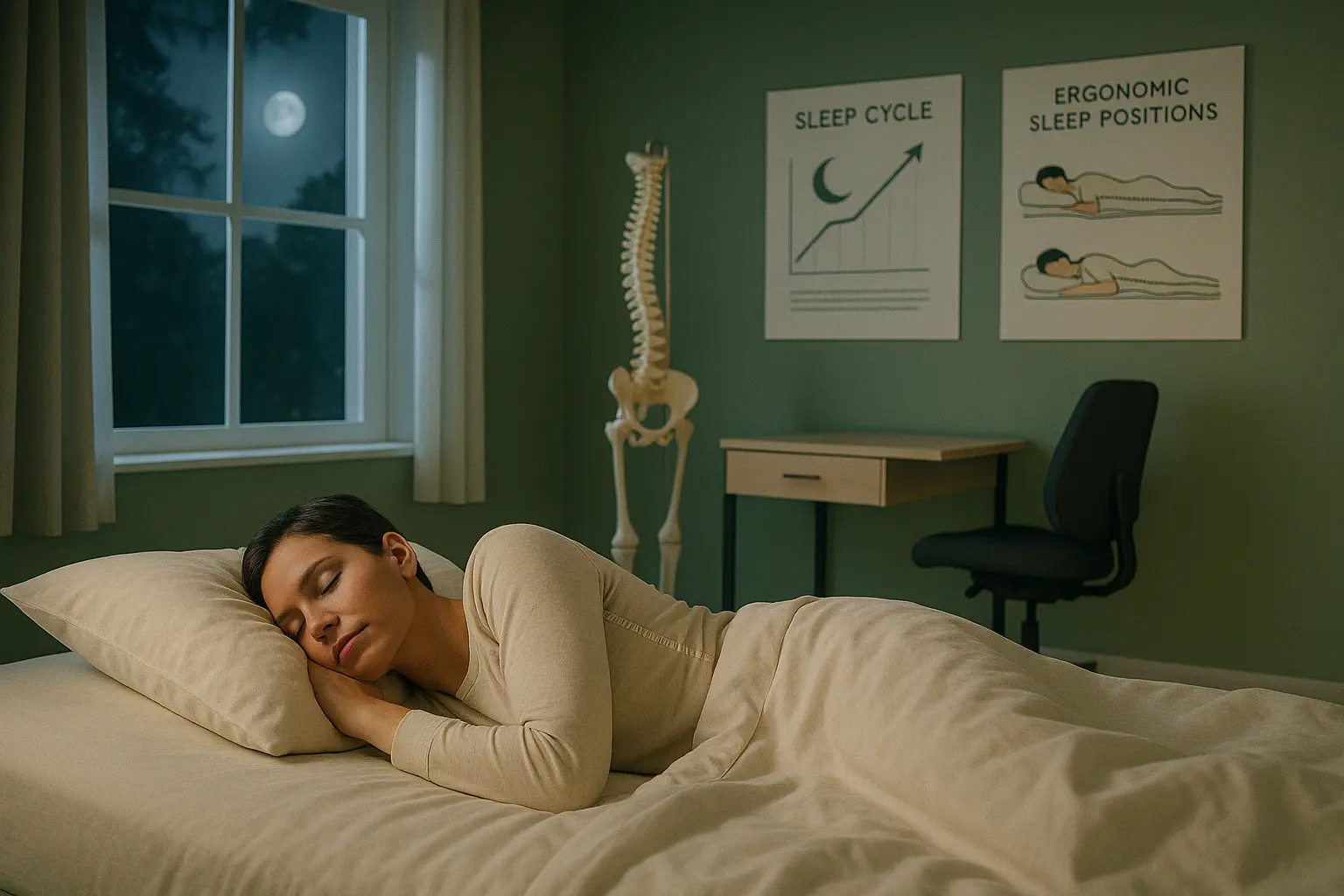
You’re exhausted. You climbed into bed at a reasonable hour. But three hours later you’re staring at the ceiling, shifting positions, trying to find one that doesn’t make your back or neck scream at you. Sound familiar? You’re not alone. Roughly one in three adults in Brooklyn and across the country reports getting less than the recommended seven hours of sleep per night. And for many of those people, the missing piece isn’t melatonin or a better mattress. It’s their spine.
Chiropractic care for sleep isn’t something most people think about when they’re tossing and turning. But it should be. At our Greenpoint clinic, some of the most satisfying results we see have nothing to do with back pain directly. Patients come in for an aching lower back or a stiff neck, and a few weeks later they tell us, “I’m finally sleeping through the night.” That’s not a coincidence.
Key Takeaways
- Pain is one of the biggest sleep disruptors, and chiropractic adjustments target the spinal misalignments that cause it
- Spinal manipulation shifts your nervous system from “fight or flight” into “rest and digest” mode, helping your body relax for sleep
- Chiropractic care for sleep works partly by lowering inflammatory markers (TNF-alpha, IL-6) that mess with your sleep cycles
- Your sleeping position, pillow choice, and mattress firmness all affect how well adjustments hold overnight
- Most patients notice sleep improvements within 2 to 4 weeks of consistent care
Why Pain Keeps You Up at Night (and What Your Spine Has to Do With It)
Here’s something Dr. Patel frequently tells patients: pain doesn’t take a break when you lie down. If anything, it gets louder. During the day your brain is busy processing a thousand other signals. At night, with fewer distractions, that aching lower back or tight neck becomes the only thing your nervous system can focus on.
Musculoskeletal pain is one of the top reasons adults can’t fall asleep or stay asleep. When your vertebrae are even slightly out of alignment, they can compress the nerves running through and around your spinal column. That compression creates a low-grade pain signal that keeps your brain on alert, even when you’re not consciously aware of it.
Research backs this up. A 2000 study published in the Journal of Manipulative and Physiological Therapeutics found that spinal manipulation produced significant pain reduction, which correlated directly with improved sleep duration and quality [1]. If you’ve been dealing with chronic back pain, there’s a good chance it’s stealing your sleep too. We wrote a full guide on how to sleep with back pain if that’s your main issue.
The approach starts with a simple idea: fix the misalignment, reduce the pain signal, and let your brain actually power down at night.
How Chiropractic Adjustments Reset Your Nervous System for Sleep
This part surprises most patients. Chiropractic care for sleep doesn’t just work by reducing pain. It actually changes the way your nervous system operates.
Your autonomic nervous system has two modes. There’s the sympathetic side, your “fight or flight” response, and the parasympathetic side, your “rest and digest” mode. For good sleep, you need that parasympathetic system running the show. The problem? Spinal misalignments can keep your sympathetic system stuck in overdrive. Your body stays tense, your heart rate stays elevated, and your brain won’t let you drift off.
When we perform a spinal adjustment, it stimulates mechanoreceptors in your joints and surrounding muscles. A 2007 study in Clinical Neurophysiology showed that cervical spine manipulation alters sensorimotor integration, triggering measurable neurological changes in how the brain processes signals from the body [2]. That’s a fancy way of saying: the adjustment tells your nervous system it’s safe to relax.
One pattern we notice in our Brooklyn patients is that people who come in wound tight from stress, desk work, or long commutes often report feeling deeply calm after an adjustment. That calm isn’t just in their heads. It’s a real, measurable shift from sympathetic dominance to parasympathetic activation [3]. And that shift is exactly what your body needs to fall asleep and stay asleep.
The Inflammation Connection: Why Your Immune System Might Be Ruining Your Sleep
Ever notice that when you’re fighting a cold, you sleep terribly? That’s inflammation at work. Chronic, low-grade inflammation does the same thing, just more quietly and over a longer period.
Your body produces proteins called cytokines as part of its inflammatory response. Two of the big ones are TNF-alpha and IL-6. When these stay elevated, they disrupt your natural sleep cycles, particularly the deep, restorative stages of sleep that leave you feeling refreshed [4].
Here’s where chiropractic care for sleep gets interesting. A 2006 study by Teodorczyk-Injeyan et al. found that spinal manipulative therapy reduced inflammatory cytokines in study participants [5]. A follow-up study in 2021 by the same research group confirmed that chiropractic adjustments reduced inflammatory mediators in patients with low back pain [6].
Lower inflammation means less disruption to your sleep architecture. It also means less pain sensitivity overall, which creates what we like to call a “positive loop.” Better sleep leads to less inflammation. Less inflammation leads to better sleep. Chiropractic treatment kicks that cycle into gear.
Your Sleep Position Matters More Than You Think
You can get the best adjustment in the world, but if you go home and sleep in a position that undoes it, you’re fighting an uphill battle. Let’s talk about what actually works.
For Lower Back Pain
Sleep on your back with a pillow under your knees. This takes pressure off the lumbar spine and keeps it in a neutral curve. If you’re a side sleeper, place a pillow between your knees to keep your hips aligned. Avoid sleeping on your stomach. It forces your lumbar spine into extension and rotates your neck for hours at a time.
For Neck Pain and Headaches
Your pillow is the key player here. You want it to support the natural curve of your cervical spine without pushing your head forward or letting it drop backward. Side sleepers need a thicker pillow than back sleepers. If you’re waking up with neck pain or headaches, your pillow is the first thing to evaluate.
For Upper Back and Shoulder Pain
Side sleepers with shoulder pain should avoid sleeping directly on the affected shoulder. Try a slight recline using a wedge pillow, or sleep on the opposite side with a body pillow for support. Back sleeping with arms at your sides is the safest bet for posture-related upper back issues.
Pillow and Mattress Recommendations
- Pillows: Memory foam contour pillows work well for most people. Look for one labeled “cervical support.” Skip the super-soft down pillows. They feel nice but offer zero structural support.
- Mattress firmness: Medium-firm tends to work best for spinal health. A mattress that’s too soft lets your hips sink, bending your spine. Too firm and it creates pressure points on your shoulders and hips. If your mattress is older than 8 years, it’s probably time.
- The towel trick: Roll a hand towel and place it inside your pillowcase at the bottom edge. This adds cervical support to any pillow and costs nothing.
What Happens at a Sleep-Focused Chiropractic Appointment
If you come to our Greenpoint office specifically because you’re not sleeping well, the visit looks a little different from a standard adjustment.
First, we talk. Not just about where it hurts, but about your sleep habits. When do you go to bed? How long does it take to fall asleep? Do you wake up during the night? What position do you sleep in? What does your mattress situation look like? These questions tell us a lot about whether the problem is structural, neurological, or a combination.
Then we examine your spine. We’re looking for areas of restricted motion, muscle tension patterns, and misalignments that could be compressing nerves or keeping your nervous system in that “fight or flight” state. We pay particular attention to the cervical spine (neck) and thoracic spine (mid-back), because these regions have the most direct influence on autonomic nervous system function.
The adjustment itself is targeted. We’re not cracking everything that pops. We identify the specific segments causing problems and apply precise, controlled force to restore normal motion. Many patients feel an immediate sense of relaxation after the adjustment, especially in the neck.
Before you leave, we go over your sleep setup. Pillow height, mattress type, sleeping position, and any pre-bed habits that might be working against you. We also prescribe specific stretches and exercises you can do before bed to help your adjustment hold through the night.
A Sleep Self-Assessment: Is Your Spine the Problem?
Not sure if chiropractic care for sleep is right for you? Run through this checklist. If you check three or more, your spine is likely playing a role in your poor sleep.
- You wake up stiff or sore most mornings
- You can’t find a comfortable sleeping position
- You fall asleep fine but wake up repeatedly during the night
- You have known back pain, neck pain, or headaches
- You sit at a desk for more than 6 hours a day
- You feel physically tense when you lie down, even when you’re mentally tired
- You’ve tried sleep aids or supplements without lasting results
- Your sleep problems started after an injury, accident, or period of high stress
- You wake up with numbness, tingling, or pain in your arms or hands
- You grind your teeth at night (bruxism is often linked to cervical tension)
If several of those hit home, you don’t need another supplement. You need someone to look at your spine.
Practical Strategies to Sleep Better Tonight
While chiropractic care for sleep addresses the structural root causes, there’s plenty you can do at home to support the process. Here’s what we recommend to our patients.
- Heat before bed: Apply a heating pad to your lower back or neck for 15 to 20 minutes before sleep. Heat relaxes tight muscles and increases blood flow to stiff areas.
- Diaphragmatic breathing: Lie on your back, place one hand on your chest and one on your belly. Breathe in through your nose so your belly rises (not your chest). Exhale slowly through your mouth. Do this for 5 minutes. It directly activates your parasympathetic nervous system.
- Gentle stretching routine: Cat-cow stretches, child’s pose, and a supine spinal twist. Spend 5 to 10 minutes on these before getting into bed. They help decompress your spine after a full day of gravity working against you.
- Lumbar stabilization exercises: Do your prescribed core exercises twice a day. A stable core means your spine holds its alignment better, including during sleep.
- Consistent sleep schedule: Go to bed and wake up at the same time every day, weekends included. Your circadian rhythm responds to consistency.
- Cool your room: Keep your bedroom between 65 and 68 degrees Fahrenheit. A cool room signals your body that it’s time to sleep.
- Limit screens one hour before bed: Blue light suppresses melatonin production. If you must use your phone, switch to night mode.
- Avoid heavy meals and caffeine after 2 PM: Both can disrupt sleep architecture, even if you don’t feel “wired.”
What the Research Says (and What It Doesn’t)
We believe in being straight with you about the science. Multiple studies report that patients experience better sleep after chiropractic treatment. A 2005 study in the Journal of Manipulative and Physiological Therapeutics explored the question “Insomnia: does chiropractic help?” and found encouraging results [3]. A 2010 review in the Journal of Chiropractic Medicine analyzed the existing literature on chiropractic and insomnia, finding consistent patient-reported improvements [4].
At the same time, researchers acknowledge that large-scale randomized controlled trials specifically on chiropractic care for sleep are still limited. Most studies rely on patient-reported outcomes rather than polysomnographic (sleep lab) data. That’s a legitimate limitation.
But here’s the practical reality: the mechanisms are well-established. We know spinal manipulation reduces pain. We know it shifts autonomic nervous system balance. We know it lowers inflammatory markers. All three of those things directly affect sleep quality. The clinical evidence, combined with what we see every week in our Brooklyn practice, gives us confidence that chiropractic care for sleep is a real and reliable approach.
Frequently Asked Questions
How quickly does chiropractic care for sleep show results?
Most of our patients notice improvements within 2 to 4 weeks of starting regular treatment. Some feel a difference after the very first adjustment, particularly if their sleep problems are related to acute pain or muscle tension. Chronic issues typically take longer because we’re retraining your nervous system, not just addressing one night’s discomfort.
Can chiropractic adjustments help with sleep apnea?
Chiropractic care primarily targets musculoskeletal causes of poor sleep. That said, some patients with mild obstructive sleep apnea report improvements when cervical adjustments reduce airway restrictions caused by neck misalignment. If you suspect sleep apnea, we’d recommend a sleep study alongside chiropractic care so you’re covering all bases.
How often should I see a chiropractor for sleep problems?
It depends on your specific situation. Most patients start with 2 to 3 visits per week for the first few weeks, then taper to once a week or biweekly as their sleep stabilizes. Dr. Patel builds a personalized schedule based on your exam findings and how you respond to the first few adjustments.
Are there any side effects that could affect my sleep?
Some patients feel mild soreness after an adjustment, similar to what you’d feel after a good workout. This usually resolves within 24 hours. Rarely, this temporary soreness might affect sleep the night of the adjustment. After that initial period, the trend goes strongly in the other direction.
I’ve tried everything for sleep. Why would chiropractic be different?
Most sleep solutions target the symptoms. Melatonin tries to override your brain chemistry. Sleep aids sedate you. White noise machines mask the problem. Chiropractic care for sleep goes after a root cause that most other approaches completely ignore: the structural and neurological state of your spine. If your spine is misaligned and your nervous system is stuck in overdrive, no amount of chamomile tea is going to fix that.
Can children benefit from chiropractic adjustments for better sleep?
Yes. We use gentle, age-appropriate techniques for younger patients. Children who have trouble settling down at night, who sleep restlessly, or who wake frequently can benefit from chiropractic evaluation. Pediatric misalignments are surprisingly common, especially in active kids and teens carrying heavy backpacks.
Ready to find relief? Schedule an appointment online or visit us at Brooklyn Chiropractic Care, 112 Greenpoint Ave. STE 1B, Brooklyn, NY 11222.
References
- Hains G, et al. “A combined ischemic compression and spinal manipulation in the treatment of fibromyalgia: a preliminary estimate of dose and efficacy.” Journal of Manipulative and Physiological Therapeutics, 2000. PubMed
- Haavik-Taylor H, et al. “Cervical spine manipulation alters sensorimotor integration: a somatosensory evoked potential study.” Clinical Neurophysiology, 2007. PubMed
- Jamison JR, et al. “Insomnia: does chiropractic help?” Journal of Manipulative and Physiological Therapeutics, 2005. PubMed
- Kingston J, et al. “A review of the literature on chiropractic and insomnia.” Journal of Chiropractic Medicine, 2010. PubMed
- Teodorczyk-Injeyan JA, et al. “Spinal manipulative therapy reduces inflammatory cytokines but not substance P production in normal subjects.” Journal of Manipulative and Physiological Therapeutics, 2006. PubMed
- Teodorczyk-Injeyan JA, et al. “Effects of spinal manipulative therapy on inflammatory mediators in patients with non-specific low back pain: a non-randomized controlled clinical trial.” Chiropractic & Manual Therapies, 2021. PubMed
Not Sure What's Causing Your Pain?
Take our 60-second pain assessment and get a personalized care recommendation from Dr. Patel.
Take the Assessment