(347) 625-1246
 hello@brooklynchirocare.com
 112 Greenpoint Ave. STE 1B, Brooklyn, NY 11222
You feel it the moment you sit down. A sharp, electric pain that starts in your lower back and shoots straight down your leg. Sometimes it burns. Sometimes it goes numb. Either way, it stops you in your tracks.
If that sounds familiar, you’re dealing with sciatica. And if you’re in Brooklyn wondering whether a chiropractor can actually help, the short answer is yes. But let’s get into what that actually looks like.
Key Takeaways
- Sciatica is nerve pain caused by compression of the sciatic nerve, usually from a herniated disc or tight piriformis muscle
- Most patients feel meaningful improvement within 4-6 weeks of consistent chiropractic care
- Your first visit includes a full movement assessment, not just adjustments
- Chiropractic patients with sciatica have significantly lower rates of opioid prescriptions than those in standard medical care [1]
- Home exercises between visits matter as much as the adjustments themselves
What Is Sciatica, Exactly?
Your sciatic nerve is the longest nerve in your body. It runs from your lower spine, through your hips and glutes, and all the way down each leg. When something presses on it (a herniated disc, bone spur, or tight piriformis muscle), you get that signature shooting pain.
It’s not just “bad back pain.” It’s different. The nerve pain radiates down one leg (sometimes both). You might feel sharp jolts when you sneeze or cough. Sitting too long makes it worse. Standing from a chair can be genuinely difficult.
Sound familiar? That’s because sciatica is one of the most common conditions we see at our Greenpoint clinic. It affects up to 40% of people at some point in their lives.
What Causes Sciatica?
The sciatic nerve gets compressed for a few different reasons. A herniated disc in your lumbar spine is the most common culprit. The soft inner material pushes through the disc wall and presses directly on the nerve root. That’s the sharp, electrical type of sciatica most people describe.
But it’s not always a disc. Piriformis syndrome, where the piriformis muscle in your glute tightens around the nerve, causes a similar pattern. So does spinal stenosis, which is a narrowing of the spinal canal, and degenerative disc disease.
In our Greenpoint practice, we often see sciatica in three groups: desk workers whose hips have tightened from years of sitting, people who had a sudden lifting injury, and older patients where the disc has gradually worn down. Different causes, same nerve.
What Happens at Your First Chiropractic Visit for Sciatica
Here’s what most people don’t know: your first visit isn’t about getting adjusted. It’s about figuring out exactly what’s driving your pain.
Dr. Patel will walk you through a full history: when it started, what makes it better or worse, whether there’s any weakness in the leg, and whether you’ve had imaging done. Then comes the physical exam: range of motion testing, orthopedic tests like the straight leg raise, and neurological checks to pinpoint which nerve root is involved.
That assessment matters. Sciatica from a disc herniation responds differently than sciatica from piriformis tightness. You need to know which you’re dealing with before any treatment starts. The whole first visit runs about 45 minutes. Follow-ups are typically 20-30 minutes.
How Chiropractic Treatment Works for Sciatica
Once Dr. Patel knows what’s causing your sciatica, treatment usually combines several approaches, not just spinal manipulation.
Spinal adjustments reduce mechanical pressure on the disc and nerve root. A randomized controlled trial found that 72% of patients with acute sciatica and disc protrusion had significant pain reduction after spinal manipulation, compared to 20% in the sham group [2].
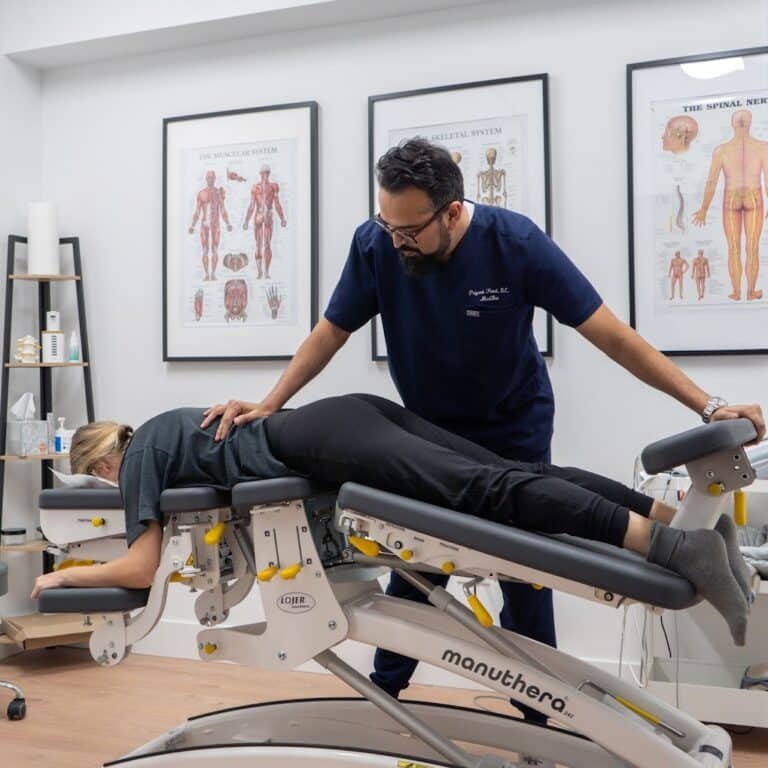
Flexion-distraction technique is a gentle, table-assisted decompression method. The table moves in a slow pumping motion to create negative pressure in the disc, which helps pull herniated material away from the nerve. No cracking. No twisting. Many patients with disc-related sciatica respond better to this than standard manipulation.
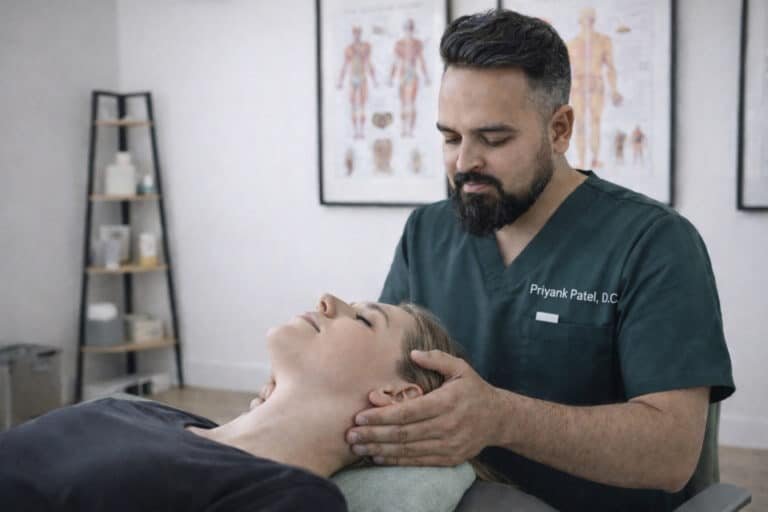
Soft tissue work on the piriformis and surrounding hip muscles reduces muscle-driven nerve compression. If your sciatica is partly muscular, skipping this step leaves half the problem untreated.
Therapeutic exercises are always part of the plan. You’ll get specific stretches and strengthening moves to do at home between visits. What you do between appointments matters as much as the appointments themselves.
How Long Does Sciatica Treatment Take?
This is the question everyone asks. The honest answer: it depends on how long you’ve had it and what’s causing it.
For acute sciatica (pain that started within the last few weeks), most patients feel 50-70% better within the first 4-6 weeks of twice-weekly visits. Chronic sciatica that’s been going on for months typically takes 8-12 weeks of consistent care before you see major improvement.
A typical care plan at our Brooklyn clinic looks like this:
- Weeks 1-3: 2-3 visits per week: reducing acute inflammation, restoring movement, beginning decompression
- Weeks 4-6: 1-2 visits per week: consolidating gains, adding strengthening exercises, reducing dependency on passive care
- Weeks 7-12 (if needed): Weekly or biweekly: maintenance and addressing underlying postural drivers
Some patients feel dramatically better after the first two or three visits. Others need the full course. Dr. Patel reassesses at week 4 to make sure you’re progressing on track.
What the Research Says
A 2025 study published in PLOS One analyzed over 216 million patient records and found that sciatica patients who received chiropractic spinal manipulation had significantly lower rates of opioid-related adverse events compared to those in standard medical care [1]. For many patients, addressing the root cause through chiropractic reduces the need for pain medication.
Treating sciatica in Brooklyn?
Dr. Patel sees patients at our Greenpoint clinic, 112 Greenpoint Ave STE 1B. Same-day appointments are often available.
What to Expect After Each Visit
It’s normal to feel some soreness after your first few adjustments. Think of it like the feeling after a good workout. Your spine and surrounding muscles are adapting to movement they haven’t had in a while. That usually fades within 24 hours.
Some patients feel immediate relief after their first session. Others notice gradual improvement over the first week or two. If your pain worsens significantly after a visit, or if you develop any new weakness or loss of bladder or bowel control, call us immediately. That needs urgent evaluation.
Home Care Between Visits
What you do between appointments directly affects how fast you improve. Here’s what Dr. Patel typically recommends for sciatica patients:
- Ice, not heat, for acute flare-ups. 15-20 minutes on the lower back or glute, up to 3x per day. Heat can increase inflammation early on
- Keep moving. Complete rest makes sciatica worse, not better. Short walks of even 10 minutes maintain circulation and prevent muscle tightening
- Piriformis stretch daily. Lie on your back, cross the affected leg over the opposite knee, and gently pull the uncrossed leg toward your chest. Hold 30 seconds, 3 sets per side
- Avoid sitting more than 30-40 minutes at a stretch. Set a timer. Stand, take a short walk, then sit again. Your subway commute counts here too
- Sleep on your side with a pillow between your knees. This takes pressure off the lumbar spine overnight
When to See a Chiropractor vs. When to Go to the ER
Chiropractic care is appropriate for the vast majority of sciatica cases. But a few situations need immediate medical attention.
Go to the emergency room if you have sciatica along with loss of bladder or bowel control, progressive weakness in both legs, sciatica after a fall or trauma, or fever with back pain. These can indicate cauda equina syndrome or spinal infection. Both are medical emergencies.
For everything else (leg pain, numbness, tingling, sharp shooting sensations), chiropractic is a safe, evidence-supported starting point. If imaging is needed, Dr. Patel will refer you for an MRI and coordinate from there.
Getting Sciatica Treatment in Brooklyn
Our Greenpoint chiropractic clinic at 112 Greenpoint Ave has helped hundreds of Brooklyn patients get back to the things sciatica was keeping them from: sitting through a meal, walking to the subway, sleeping through the night without waking up in pain.
Dr. Patel tailors every plan to your specific presentation: which nerve root is involved, what’s causing the compression, how long you’ve had it, and what your daily life looks like. If you’re commuting from Greenpoint or Williamsburg to Manhattan every day, that sitting time is built into your rehab plan.
If you’ve been putting off getting your leg pain checked, most patients wish they’d come in sooner. Same-day appointments are often available.
Frequently Asked Questions
How long does sciatica last with chiropractic treatment?
Most patients with acute sciatica feel significant improvement within 4-6 weeks of consistent care. Chronic sciatica that’s been present for months typically takes 8-12 weeks. Dr. Patel reassesses progress at the 4-week mark and adjusts the plan as needed.
Is chiropractic care safe for sciatica?
Yes, for the majority of cases. Dr. Patel completes a full assessment before any treatment to rule out contraindications. The flexion-distraction technique is often used for disc-related sciatica precisely because it’s gentle and avoids high-force manipulation.
How many sessions do I need for sciatica?
A typical plan runs 8-15 visits over 4-8 weeks, depending on severity and how long you’ve had the pain. Acute cases often resolve faster. Dr. Patel will give you a clear timeline upfront and reassess regularly.
Can sciatica come back after chiropractic treatment?
It can, especially if the underlying cause isn’t fully addressed. That’s why home exercises are part of every plan. Patients who do their prescribed stretches and strengthening work between visits have much lower recurrence rates. Occasional maintenance visits every 4-6 weeks also help.
Do I need an MRI before seeing a chiropractor for sciatica?
No. Dr. Patel can diagnose and treat most sciatica presentations without imaging. If your exam findings suggest something more serious, he’ll refer you for an MRI and coordinate care from there. You don’t need to come in with imaging already done.
What’s the difference between sciatica and regular back pain?
Regular back pain stays in the back. Sciatica radiates. The pain travels from your lower back through your glute and down one or both legs. You might feel a sharp electric jolt, a burning sensation, or numbness and tingling. If your leg is involved, it’s likely sciatic nerve pain.
Ready to get that leg pain under control? Dr. Patel sees patients at 112 Greenpoint Ave, STE 1B, Brooklyn. Same-day appointments often available. Call (347) 625-1246 or book online.
References
[1] Vogt et al. (2025). Association between chiropractic spinal manipulation for sciatica and opioid-related adverse events. PLOS One. doi:10.1371/journal.pone.0317663
[2] Santilli V et al. (2006). Chiropractic manipulation in the treatment of acute back pain and sciatica with disc protrusion. Spine Journal. PMID: 16517383