 (347) 625-1246
 hello@brooklynchirocare.com
 112 Greenpoint Ave. STE 1B, Brooklyn, NY 11222
Scoliosis Treatment in Brooklyn
What Is Scoliosis?
You usually notice it in a photo first. One shoulder looks higher than the other. Or maybe a shirt just never hangs right. If you’re a parent, you might have spotted a curve in your child’s spine at the beach or during a school screening.
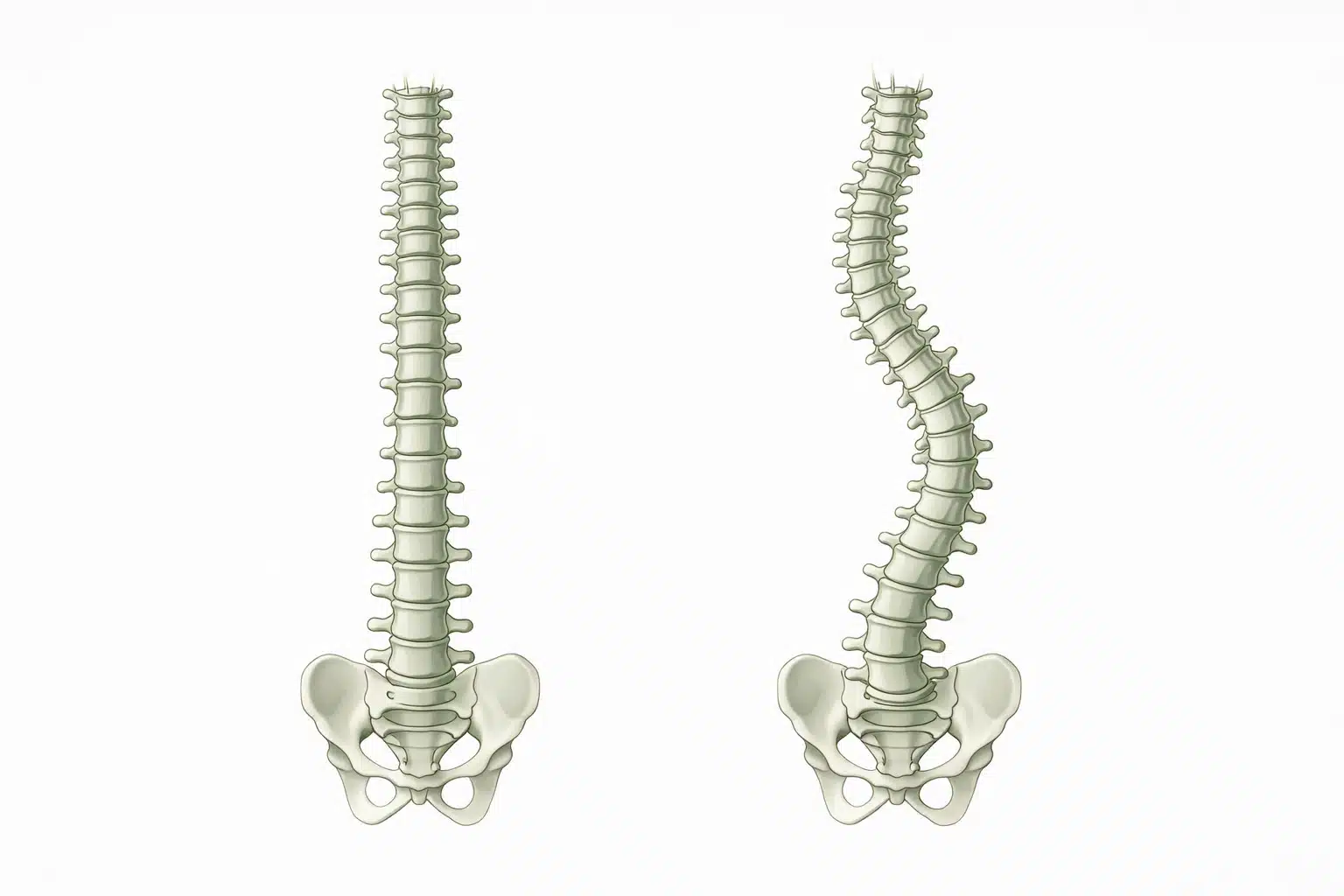
Scoliosis is a condition where the spine curves sideways, often forming an “S” or “C” shape instead of a straight line. But it’s not just a simple bend. The spine actually twists in three dimensions. That’s why you might see a “rib hump” on one side when bending forward. It most often shows up between ages 10 and 15, and studies show it’s more common in girls (4.06%) than boys (2.58%) [1].
The good news? You don’t need surgery to manage it. In our Greenpoint clinic, Dr. Patel helps patients with scoliosis every week. About 3% of teenagers have some degree of spinal curvature [1]. You’re not alone, and there are real options beyond just “wait and see.”
Schedule an Appointment
Common Causes of Scoliosis
Honestly? Most of the time we don’t know. That’s what “idiopathic” means in medical terms. It just happens. But we do know a few factors that play a role:
Genetics
If your mom or sister has scoliosis, you’re more likely to develop it too. Research shows there’s a strong hereditary component, so family history matters.
Growth Spurts
When kids grow fast, especially between ages 10 and 15, mild curves can progress quickly. That’s why monitoring during these years is so important.
Congenital Factors
Sometimes the vertebrae just didn’t form perfectly before birth. These cases are less common but can be identified early with proper screening.
Neuromuscular Conditions
Conditions like cerebral palsy or muscular dystrophy can affect the muscles that support the spine, leading to curvature over time.
Let’s clear something up: Bad posture didn’t cause this. Your teen didn’t get scoliosis from video games or carrying a heavy backpack [3]. Those things might make their back sore, but they won’t structurally twist the spine. That’s a myth we hear all the time.
Schedule an Appointment
Scoliosis Symptoms to Watch For
Here’s the tricky part: in kids, scoliosis usually doesn’t hurt. The curve can progress without any pain signals at all. For adults, it’s a different story. Years of wear and tear on a curved spine often lead to stiffness, aching, and sometimes nerve compression.
Common signs to watch for:
- One shoulder sits noticeably higher than the other
- One hip sticks out more than the opposite side
- Clothes don’t hang evenly on the body
- Head isn’t centered directly over the pelvis
- Ribs protrude more on one side when bending forward (the “Adam’s test”)
- Back pain or muscle fatigue, especially after standing or sitting for long periods
- Feeling short of breath during physical activity, in more severe curves [4]
When to act fast: If you notice sudden changes in posture, new numbness or tingling in the legs, difficulty breathing, or loss of bladder control, see a healthcare provider right away. These could signal nerve compression that needs immediate attention.
What the Research Says About Chiropractic Care for Scoliosis
Studies show that chiropractic rehabilitation can make a real difference for scoliosis patients. A study published in the Journal of Chiropractic Medicine followed 28 adult scoliosis patients receiving chiropractic care. The results? Significant improvements in pain scores, Cobb angle measurements, and disability ratings. And here’s what matters most: those improvements were maintained at 24-month follow-up [2].
Another finding worth knowing: specific exercises like the Schroth method, which focuses on breathing and postural correction, have been shown to significantly reduce Cobb angles in adolescents with idiopathic scoliosis (p<0.05) [4]. That’s why we incorporate similar principles into our treatment plans here in Brooklyn.
The research is clear. While we can’t “cure” scoliosis or force a spine straight, we can help you move better, hurt less, and potentially slow curve progression. Most of our patients see meaningful improvement within 6-8 weeks of consistent care.
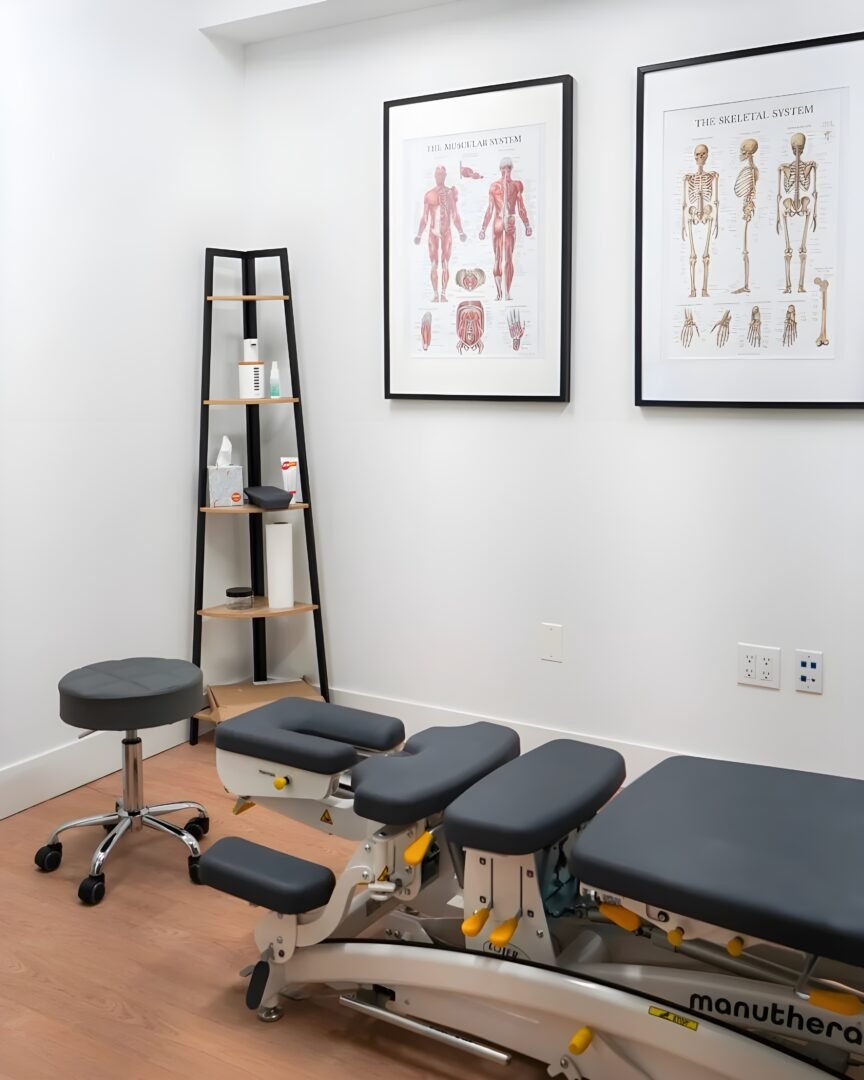
Your First Visit for Scoliosis Treatment
When you come to our Greenpoint clinic, you won’t be rushed. Dr. Patel takes time to understand your full history: when the curve was first noticed, what treatments you’ve tried, and how scoliosis affects your daily life. Bring any X-rays or MRIs you have. They help us see the full picture.
During the exam, we’ll check your posture from multiple angles, test your range of motion, and assess muscle strength on both sides of your spine. For adolescents, we pay close attention to growth indicators since curves can progress during growth spurts.
Before you leave, you’ll have a clear treatment plan. We’ll explain what we can realistically help with, how many visits to expect, and what you can do at home between appointments. No pressure, no scare tactics. Just honest information so you can make the best decision for yourself or your child.
Book Your First VisitHome Care Tips for Scoliosis Relief
Between your chiropractic appointments, these strategies can help manage your symptoms and support your progress:
- Core strengthening: Planks are excellent for scoliosis. They build stability without putting rotational stress on your spine. Start with 20-second holds, 3 times daily, and build up gradually.
- Cat-cow stretches: This yoga movement keeps your spine mobile. Go slowly and focus on moving each segment. Do 10 repetitions morning and night.
- Breathing exercises: Practice breathing into the compressed side of your ribcage. This helps expand tight areas and can improve lung capacity over time [4].
- Desk ergonomics: Keep your monitor at eye level and your chair back angled at 95-125 degrees. Looking down all day adds extra strain to an already curved spine.
- Movement breaks: Don’t sit for more than 30 minutes at a time. Your spine needs regular movement to stay healthy and prevent stiffness.
Assessment & Diagnosis
Dr. Patel starts with a thorough evaluation. This includes posture analysis, range of motion testing, and a detailed look at any imaging you bring in. For adolescents, we also assess growth patterns since curves can progress during growth spurts. You’ll leave knowing exactly what you’re dealing with and what your realistic options are.
Spinal Adjustments
We use gentle, specific adjustments to mobilize the stiff segments of your spine. With scoliosis, certain vertebrae get “locked” while others become hypermobile to compensate. Our goal is to restore balanced motion throughout the curve. Most patients notice improved flexibility and less muscle tension after just a few sessions.
Flexion-Distraction Therapy
Dr. Patel’s flexion-distraction table is particularly effective for scoliosis. This technique gently stretches the spine, taking pressure off compressed discs and tight muscles on the concave side of the curve. It’s comfortable, there’s no twisting or cracking, and it works well for patients of all ages.
Rehab & Home Exercises
A curved spine creates muscle imbalances. One side gets tight and overworked while the other becomes weak. We address both through targeted exercises you can do at home. Schroth-style breathing exercises are also part of the plan since the curve can compress the ribs and limit lung capacity [4].

When to Seek Care for Scoliosis
Don’t wait until the pain stops you from doing what you love. This is especially true for teenagers who are still growing. Curves can progress quickly during growth spurts, and early intervention gives us more options.
If you’re an adult who’s lived with scoliosis for years, you might think “this is just how it is.” But stiffness and discomfort aren’t inevitable. Many of our Brooklyn patients come in after decades of just dealing with it, and they’re surprised at how much better they can feel with the right care.
Chiropractic treatment for scoliosis focuses on what we can control: improving mobility, reducing pain, balancing muscle tension, and helping you function better day to day. We’re not promising to straighten your spine. We’re promising to help you live more comfortably with the one you have.
Who Benefits From Chiropractic Care for Scoliosis
• Adolescents with newly diagnosed curves who want to avoid bracing
• Adults with scoliosis experiencing back pain or stiffness
• Anyone whose curve causes muscle fatigue after standing or sitting
• Post-surgical patients looking to maintain mobility
• Those who want to avoid pain medication
• People seeking non-invasive treatment options
• Anyone noticing their posture getting worse over time
Most patients notice improvement within 4-6 weeks of consistent care. A study showed that about 6 months of chiropractic rehabilitation led to improvements in pain and Cobb angle that lasted at 24-month follow-up [2]. Chronic cases may take longer, but we'll give you a realistic timeline after your first evaluation.
Yes, it's generally very safe. Serious complications are extremely rare, with research showing incidence rates as low as 1 per 2 million adjustments. We use gentle techniques appropriate for curved spines. No high-velocity twisting on fragile areas. We focus on mobility and stability, not forcing anything.
We can't force a curved spine straight. But we can improve how it functions. Research shows chiropractic care can reduce pain, improve Cobb angle measurements, and help slow progression [2]. The goal is helping you move better and hurt less, not promising a "cure" that doesn't exist.
No. This is one of the biggest myths out there. People with scoliosis may appear to have poor posture, but the scoliosis causes the posture issue, not the other way around [3]. Slouching, sleeping position, and heavy backpacks won't cause structural spinal curvature.
Stay active. Movement is medicine for scoliosis. Specific exercises like the Schroth method have been shown to significantly improve Cobb angles and quality of life [4]. We'll teach you which exercises help your specific curve pattern and which activities to modify.
Take the Next Step Toward Scoliosis Relief
You deserve to move without pain. Schedule your visit at our Greenpoint clinic and start care focused on your recovery.