(347) 625-1246
 hello@brooklynchirocare.com
 112 Greenpoint Ave #1B, Brooklyn, NY 11222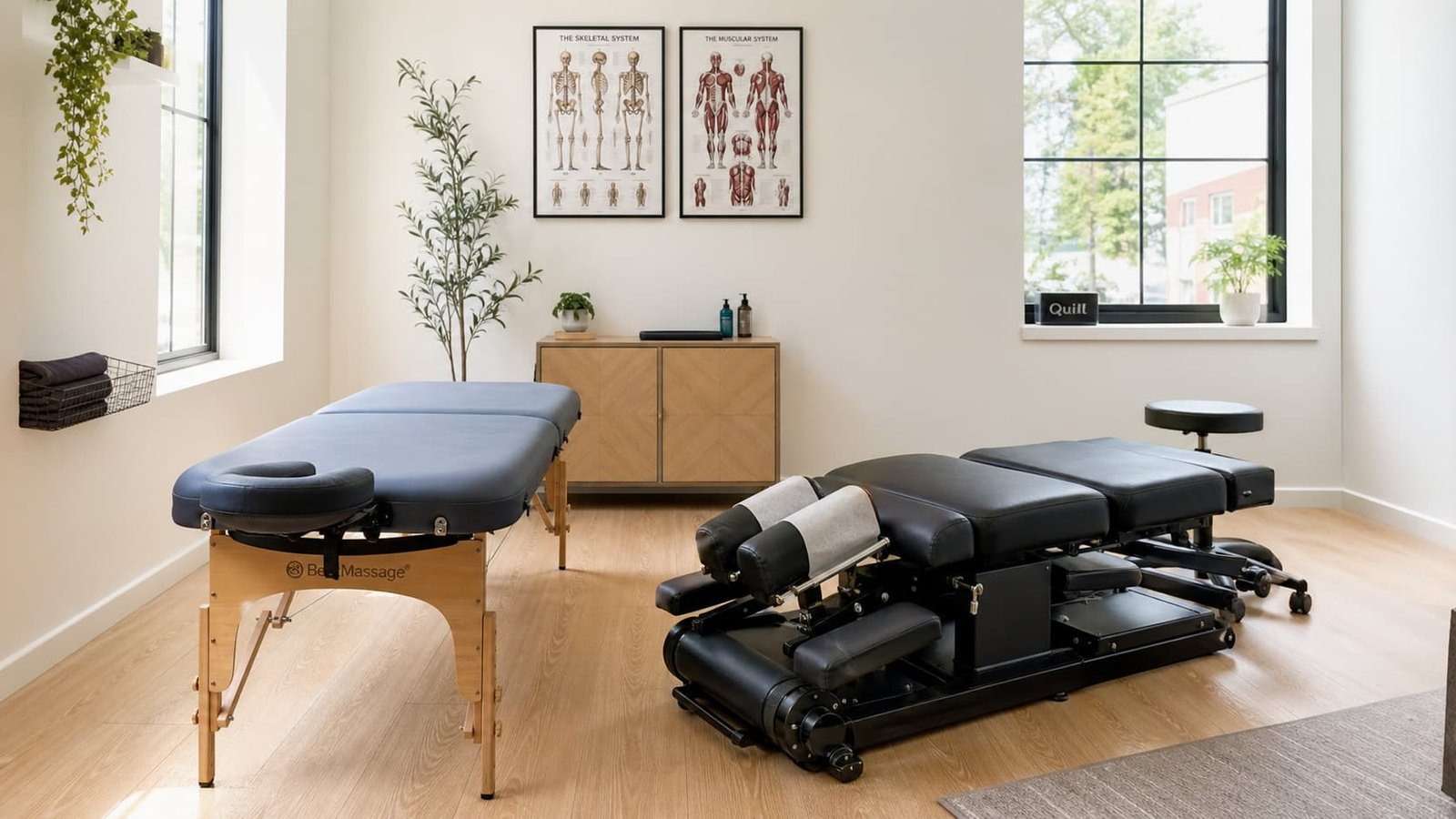
You’ve got a knot between your shoulder blades that won’t quit. Your lower back locks up every time you stand from your desk. You’re thinking about booking a massage and a chiropractic appointment, but that’s two trips, two copays, two blocks of time carved out of a week that’s already packed. Here’s what I tell patients who are weighing that decision: chiropractic and massage in Brooklyn don’t have to be two separate errands. At our Greenpoint clinic, we do both in a single visit, and there’s a real clinical reason for it.
Key Takeaways
- Massage relaxes the muscles around a misaligned joint, so the adjustment takes hold more easily and lasts longer.
- A 2024 network meta-analysis found multimodal manual therapy (manipulation plus soft tissue work) outperformed single-modality treatment for neck pain and disability.
- Getting both at one location saves you a second appointment, a second intake, and a second commute.
- Dr. Patel and the licensed massage therapist coordinate your treatment plan in real time, not through referral notes.
- Most patients feel noticeably looser and more mobile leaving a combined visit than they do after either service alone.
Table of Contents
- Why Chiropractic and Massage in Brooklyn Work Better Together
- What Happens to Your Body During a Combined Visit
- Massage First or Adjustment First?
- Who Benefits Most From Combined Visits
- What to Expect at Your First Combined Visit
- Home Care Between Appointments
- When a Combined Visit Isn’t the Right Call
- Frequently Asked Questions
Why Chiropractic and Massage in Brooklyn Work Better Together
A chiropractic adjustment corrects joint position. Massage therapy releases the soft tissue around that joint. When you separate these two things by days or weeks, the muscle tension that pulled the joint out of alignment in the first place gets a head start on undoing your adjustment. I see this pattern constantly: patient gets adjusted Monday, feels great Tuesday, and by Thursday the same tightness is dragging things back to where they started.
Combining both in one visit short-circuits that cycle. A 2024 systematic review and network meta-analysis published in BMC Musculoskeletal Disorders compared manipulation alone, soft tissue therapy alone, and multimodal approaches for neck pain. Multimodal treatment, which includes spinal manipulation paired with soft tissue mobilization, came out as the optimal choice for reducing both pain intensity and disability.
That’s not a surprise if you think about what’s actually happening at the tissue level. Tight muscles resist adjustment. Loose muscles accept it. Pretty straightforward.
What Happens to Your Body During a Combined Visit
Your muscles and your joints aren’t independent systems. They’re connected by fascia, tendons, and a feedback loop that runs through your spinal cord. When a muscle stays in spasm, it holds the vertebra it attaches to in a bad position. When a vertebra sits crooked, the muscles around it tighten up to protect it. Chicken-and-egg problem.
Massage breaks the muscle side of that loop. The therapist works through the layers of tissue around your spine, upper traps, paraspinals, QL, whatever’s locked up. Blood flow increases. The tissue softens. Your nervous system dials down the guarding reflex.
Then the adjustment addresses the joint side. With the muscle tension already reduced, the joint moves more freely. Less force needed. More range restored. A randomized controlled trial in The Spine Journal showed that patients receiving spinal manipulation for chronic low back pain saw mean pain and disability improvement of 20 points by 12 weeks, sustained out to 52 weeks. Pair that with soft tissue prep and the adjustment doesn’t have to fight through layers of spasm to get where it needs to go.
One patient last week put it well: “It felt like my back finally let the adjustment in.” That’s exactly what’s happening.
Massage First or Adjustment First?
I get this question a lot. For most patients, massage first is the move. Here’s why.
The massage therapist spends 30 to 60 minutes working through the soft tissue restrictions that are contributing to your problem. By the time you’re on my table for the adjustment, the muscles have already let go of their grip on the joint. I can feel the difference immediately. The segment moves easier. The adjustment is smoother. Sometimes I hear a more complete release because the surrounding tissue isn’t fighting me.
There are exceptions. Some patients with acute disc issues or radiculopathy do better when I adjust first to take pressure off the nerve, and then the therapist follows up with gentle work to reduce the secondary muscle guarding. But that’s a clinical decision we make based on your exam findings, not a blanket rule.
At BCC, the therapist and I are in the same clinic. We talk about your case before you even get on the table. That kind of coordination doesn’t happen when you’re seeing a massage therapist in one building and a chiropractor three blocks away.
Who Benefits Most From Combined Visits
Desk workers with chronic upper back and neck tension. You’ve been hunching over a laptop in your Greenpoint apartment for eight hours. Your upper traps are concrete. Your thoracic spine is stuck in flexion. Deep tissue massage loosens the muscular layer, and the adjustment restores motion to the segments underneath. I see this combination produce results in one visit that would take three or four visits of adjustment alone.
Runners and cyclists who train hard and recover poorly. Your hip flexors are short. Your glutes aren’t firing. Your SI joint is taking the hit. Massage gets into the psoas and piriformis. The adjustment resets the SI joint and lumbar spine. Patient walks out actually able to activate their glutes during a squat test. Night-and-day difference.
People recovering from car accidents or work injuries often benefit too, though the treatment plan depends on the specifics of the injury and how far along you are in recovery.
Anyone who’s tried massage alone and it “didn’t stick.” If you’ve ever felt amazing leaving a massage only to feel exactly the same two days later, there’s a reason. The massage addressed the muscle, but the joint underneath was still misaligned. The tension came right back because the structural cause was still there. Adding a chiropractic adjustment to the same session closes that gap.
What to Expect at Your First Combined Visit
Your first visit at Brooklyn Chiropractic Care starts with a full exam. I check your range of motion, run orthopedic tests, palpate your spine, and figure out what’s actually going on. If we need X-rays, we take them in-house that same visit.
Once I have a clear picture, I’ll build a treatment plan that includes both chiropractic and massage in Brooklyn at the frequency that makes sense for your condition. Some patients need weekly combined visits for a few weeks. Others come in every two to three weeks for maintenance. If you’re not sure how often is right for you, I wrote a whole post on how often to schedule visits.
For the combined session itself, you’ll typically start with the massage therapist. They’ll focus on the specific areas we’ve identified in your treatment plan, not just a generic full-body rub. After that, you’ll move to my table for the adjustment. Total time in the clinic runs about 60 to 90 minutes depending on what we’re doing.
And the scheduling part is simple. One appointment. One location at 112 Greenpoint Ave. You don’t have to coordinate between two different providers who’ve never spoken to each other.
Home Care Between Appointments
- Heat after a combined visit, not ice. You’ve just had deep work done on your muscles followed by an adjustment. Your tissues need blood flow, not constriction. Use a heating pad on the treated area for 15 to 20 minutes that evening.
- Move gently the same day. A 20-minute walk is ideal. Don’t hit the gym or go for a hard run. Your body is recalibrating. Let it settle.
- Hydrate more than you think you need to. Massage releases metabolic waste from compressed tissue. Water helps flush it. Aim for an extra 16 to 24 ounces beyond your normal intake for the rest of the day.
- Stretch what we worked on. Your therapist will tell you which stretches to do based on your session. Do them daily, not just when you feel tight. Two minutes in the morning, two minutes before bed. That’s it.
- Don’t sit in one position for more than 45 minutes between visits. Set a timer if you have to. Get up, move around, reset. This is the single biggest thing desk workers can do to hold their results between appointments.
When a Combined Visit Isn’t the Right Call
Chiropractic and massage together aren’t appropriate for every situation. If you have a suspected fracture, an active infection in the area, or certain vascular conditions, massage could make things worse. Same goes for some acute disc herniations where the area is too inflamed for deep tissue work.
I always assess before we start. If I think massage might aggravate your condition, we skip it and focus on the adjustment alone (or vice versa). The point of having both services in one clinic isn’t to default to doing both every time. It’s to have the option and make the call based on what your body actually needs that day.
If you’re dealing with numbness or tingling that’s getting progressively worse, sudden weakness in a limb, or loss of bladder or bowel control, skip the appointment and go to the ER. Those are signs of something that needs imaging and possibly surgery, not manual therapy.
Frequently Asked Questions
Can I get chiropractic and massage in Brooklyn during the same appointment?
Yes. At Brooklyn Chiropractic Care in Greenpoint, we offer both massage therapy and chiropractic adjustment in a single visit. The therapist and Dr. Patel coordinate your care so you don’t have to book two separate appointments.
Should I get a massage before or after my chiropractic adjustment?
Massage before the adjustment works best for most patients. It loosens the muscles around the joint so the adjustment is smoother and holds longer. Dr. Patel may reverse the order for certain acute conditions where relieving nerve pressure first makes the massage safer and more effective.
How long does a combined chiropractic and massage visit take?
Plan for 60 to 90 minutes total. The massage portion runs 30 to 60 minutes depending on what’s needed, and the adjustment takes about 15 to 20 minutes. Your first visit will be longer because it includes the initial exam.
Is there research supporting combined chiropractic and massage treatment?
A 2024 network meta-analysis found multimodal manual therapy outperformed single-modality treatment for neck pain. Separately, a systematic review of systematic reviews confirmed massage therapy’s effectiveness for nonspecific low back pain. Combining the two addresses both joint and soft tissue dysfunction.
Do I need chiropractic and massage every visit?
Not necessarily. Some visits you’ll only need an adjustment. Others might call for massage alone, especially if you’re in a maintenance phase. Dr. Patel evaluates your condition each visit and recommends what will actually help that day, not a one-size-fits-all protocol.
What types of massage does Brooklyn Chiropractic Care offer?
We offer deep tissue, sports, and therapeutic massage. The type you receive depends on your condition. Chronic tension usually gets deep tissue work. Post-workout recovery leans toward sports massage. Your therapist matches the technique to what Dr. Patel’s exam findings show.
Ready to find relief? Schedule an appointment online or visit us at Brooklyn Chiropractic Care, 112 Greenpoint Ave. STE 1B, Brooklyn, NY 11222.
References
- Chen Y, et al. “Effectiveness of musculoskeletal manipulations in patients with neck pain: a systematic review and network meta-analysis.” BMC Musculoskelet Disord. 2024. PMC12519666
- Bronfort G, et al. “Dose-response and efficacy of spinal manipulation for care of chronic low back pain: a randomized controlled trial.” Spine J. 2014;14(7):1106-1116. doi:10.1016/j.spinee.2013.07.468
- Furlan AD, et al. “Massage for low-back pain.” Cochrane Database Syst Rev. 2015;(9):CD001929. PubMed 26329399
- Bervoets DC, et al. “The effectiveness of massage therapy for nonspecific low back pain: a systematic review of systematic reviews.” Int J Gen Med. 2015;8:61-70. PMC3772691
- Coulter ID, et al. “Clinical effectiveness and efficacy of chiropractic spinal manipulation for spine pain.” Spine J. 2023. PMC8915715
Not Sure What's Causing Your Pain?
Take our 60-second pain assessment and get a personalized care recommendation from Dr. Patel.
Take the Assessment