(347) 625-1246
 hello@brooklynchirocare.com
 112 Greenpoint Ave #1B, Brooklyn, NY 11222
Muscle cramps in Brooklyn show up in my office every July, usually from someone who just finished a loop around McCarren Park in ninety-degree heat. Calf locks up mid-stride. Or their low back seizes reaching for a water bottle at mile four. Same story, different runner, all summer long.
It’s not weakness and it’s not laziness. What’s actually going on comes down to three things stacking on top of each other: heat, fluid loss, and muscle fatigue. Here’s how they connect, and what actually helps.
Key Takeaways
- Muscle cramps in Brooklyn spike every summer among runners, cyclists, and pickup athletes training through heat and humidity.
- Heavy sweating drains sodium faster than plain water can replace it, and that imbalance is a real trigger for some cramps.
- Newer research points to muscle fatigue and altered nerve signaling, not dehydration alone, as a major driver of cramping in endurance athletes.
- Back spasm and calf cramps often show up together once your stabilizing muscles fatigue in the heat.
- Most heat-related cramping responds to hydration timing, sodium replacement, and a few visits of hands-on care, not rest alone.
Table of Contents
- What Causes Muscle Cramps in Brooklyn During Summer Workouts
- Dehydration, Electrolytes, and What the Research Actually Shows
- The Back Spasm Connection Nobody Talks About
- How Dr. Patel Treats Heat Cramps and Muscle Spasm
- What to Expect During Your First Visit
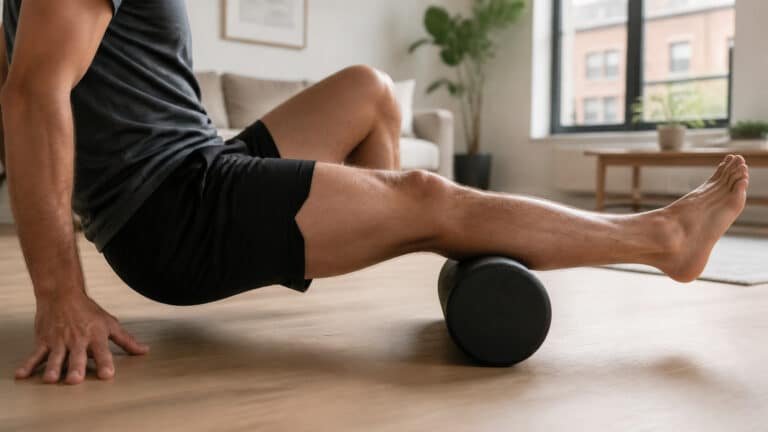
- Home Care for Summer Cramping
- Muscle Cramps in Brooklyn: When to See a Doctor
- FAQ
What Causes Muscle Cramps in Brooklyn During Summer Workouts
Muscle cramps in Brooklyn during summer workouts usually come down to heat load, fluid loss, and fatigue arriving at the same time. None of those three needs to be extreme on its own. Stack them together on a humid McCarren Park loop and your calf or hamstring can seize without much warning.
Heat and Humidity Load
Brooklyn summers aren’t just hot, they’re humid, and humidity is the part people underestimate. Sweat cools you by evaporating. When the air’s already saturated, it evaporates slower, your core temperature climbs faster, and your muscles are working in a hotter, more fatigued state than the thermometer alone suggests.
Training Volume and Pace
Patient of mine runs the McCarren loop three times a week, added a fourth day in June to train for a fall race. Cramping started within two weeks, always in the same calf, always past the thirty-minute mark. Running speed and total volume are two of the strongest predictors of cramping in the research, more so than how much water someone drank.[1]
Add in a Brooklyn summer’s other variables, sleep loss from open windows, a beer after the run, skipping a real breakfast, and you’ve got a muscle that’s fatigued before the workout even starts.
Dehydration, Electrolytes, and What the Research Actually Shows
Dehydration and sodium loss aren’t the whole story, and I’d rather be straight with you about that than repeat the simple version everyone already believes.
The Sodium Piece
There’s a real category of heat cramping tied to heavy, salty sweating. If you’re the type who finishes a run with white salt lines on your shirt, you’re losing a lot of sodium, and if your diet isn’t replacing it, your whole-body sodium balance can drop enough to trigger widespread cramping, not just one muscle.[2] This is the classic “heat cramp” and it responds well to electrolyte replacement.
The Fatigue Piece, the Newer Theory
But several prospective studies on endurance athletes, including one following 210 Ironman triathletes, found that dehydration and serum sodium levels didn’t actually predict who cramped. Running speed and a history of prior cramping did.[3] The leading theory now is altered neuromuscular control: as a muscle fatigues, the nerve signals that normally keep it from over-contracting get disrupted, and the muscle fires when it shouldn’t.[1]
Real answer is both mechanisms exist, and they overlap more than either camp likes to admit. A heavy sweater who’s also pushing race pace on a humid day is dealing with sodium loss and fatigue at once. Treating it as one or the other misses half the picture.
The Back Spasm Connection Nobody Talks About
Summer workout back spasm usually isn’t a separate problem from the leg cramp, it’s downstream of it. When your calf or hamstring starts cramping or fatiguing, your gait changes to protect it, and your lower back and hip stabilizers pick up the slack.
I see this constantly with runners and rec-league softball players coming out of McCarren Park in July. The pattern’s almost always the same. Leg fatigues first, stride shortens or twists to compensate, and by the time they’re walking to the car, the low back has locked up too. It’s not the heat directly hurting your back. It’s your back doing extra work because something downstream gave out first.
Add dehydration on top of that and your paraspinal muscles, the ones running along your spine, have less fluid volume to work with and fatigue faster than usual. A muscle that’s already tired and under-hydrated cramps more easily than one that isn’t.
How Dr. Patel Treats Heat Cramps and Muscle Spasm
I don’t treat the cramp in isolation. If you’re walking in gripping your calf but your gait’s been compensating for weeks, your SI joint and lower lumbar segments are usually restricted too, and that restriction is part of why the spasm keeps coming back.
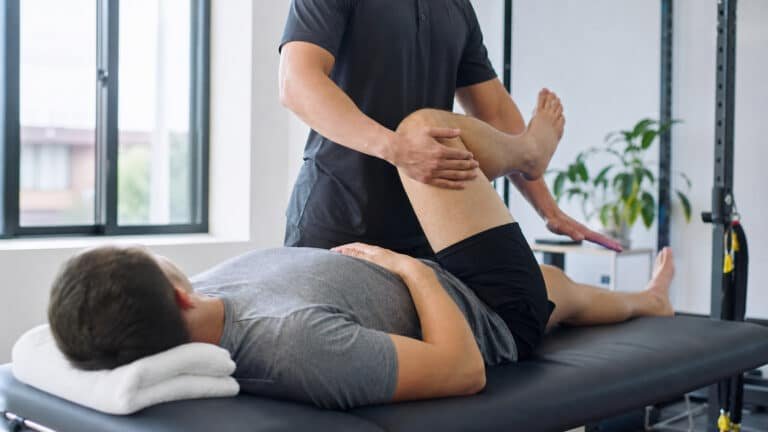
Adjustment restores motion to the joints that have been compensating. From there I work the soft tissue directly, the calf, the hamstring, the QL and paraspinals along your low back, to release the guarding pattern that’s built up. For athletes who train hard through the summer, I often pair adjustment with massage therapy to address the muscle tension that keeps pulling things back out of place between sessions.
For runners and recreational athletes specifically, this fits under our broader sports chiropractic approach, which looks at training load and movement pattern, not just the muscle that’s currently complaining. If your running routine itself is part of the pattern, our piece on running injuries around McCarren Park goes deeper into gait and training load specifically.
What to Expect During Your First Visit
Your first visit runs about 45 minutes. I start with a history that goes past “my calf cramps,” into your training volume, how much you’re actually drinking and eating before workouts, and whether this has happened before. Cramping that’s new this summer tells me something different than cramping you’ve dealt with for years.
Next is a physical exam, checking spinal and hip motion, muscle tenderness, and I’ll often watch you walk or do a simple movement screen. If there’s any concern about something beyond a straightforward muscle spasm, we can take X-rays in-house the same day. Most summer cramping doesn’t need imaging, but I’d rather rule things out than guess.
You’ll typically get your first adjustment and some soft tissue work on this same visit, plus a hydration and training plan specific to what I’m seeing. Full details on what a first visit at BCC covers are on the site if you want to read ahead.
Home Care for Summer Cramping
- Front-load your fluids. Drinking a lot right before a hot workout doesn’t help much. Start hydrating the night before and again first thing in the morning, so you’re starting the workout already topped off instead of trying to catch up mid-run.
- Salt your food the day before a long or hot workout, especially if you’re a heavy sweater. A normal, well-salted meal the night before does more than most sports drinks do the morning of.
- Carry something with sodium on runs past 45 minutes. Plain water alone can’t replace what you’re sweating out on a humid McCarren loop. An electrolyte tab or a salty snack midway through matters more the longer and hotter the effort gets.
- If a cramp hits mid-workout, stop and gently stretch the muscle rather than pushing through it. Pickle juice or a diluted vinegar drink has actual research behind it for cutting cramp duration, likely through a nerve reflex triggered in your throat, not by fixing hydration on the spot.[4]
- Shift your hardest efforts earlier or later in the day. Late morning through mid-afternoon in Brooklyn in July is when heat and humidity peak together. Moving your run to 7am or after 7pm removes a variable without changing your training plan at all.
Muscle Cramps in Brooklyn: When to See a Doctor
Most muscle cramps in Brooklyn from summer training respond to hydration changes, sodium, and a few visits of hands-on care. But some symptoms need medical attention, not a chiropractic visit.
Get emergency care if you have confusion, a very high body temperature, or you stop sweating in the heat, those are signs of heat stroke. See a doctor promptly for cramping paired with dark urine, severe swelling, or muscle pain way out of proportion to the workout, which can point to rhabdomyolysis. And if a cramp turns into numbness, tingling, or weakness that doesn’t resolve, that’s a nerve issue, not a muscle one, and it needs an exam.
Frequently Asked Questions
Do muscle cramps in Brooklyn always mean I’m dehydrated?
No. Dehydration is one factor, but research on endurance athletes consistently finds that training pace, prior cramp history, and muscle fatigue predict cramping better than hydration status alone. Heavy sweaters with real sodium loss are the exception where dehydration plays a bigger role.
What’s the fastest way to stop a cramp mid-run?
Gently stretch and hold the cramping muscle first. Pickle juice or diluted vinegar has been shown to shorten cramp duration through a reflex response, working faster than plain water even before your body could have absorbed any fluid.
Why does my lower back spasm after long runs in the heat, not just my legs?
Your back is usually compensating for a leg or hip that fatigued first. Once your calf or hamstring starts protecting itself, your gait shifts and your low back stabilizers take on extra load they weren’t built to carry for that long.
How much water should I actually drink before summer workouts?
There’s no single number that works for everyone, it depends on your sweat rate and the heat that day. A practical rule is to hydrate steadily starting the night before rather than chugging fluids right before you head out, and to drink to thirst during the workout itself.
Are electrolyte drinks or salt tablets better than water alone?
For workouts under 45 minutes, plain water is usually fine. Past that, especially in Brooklyn’s July and August humidity, adding sodium through a drink, tablet, or salty snack matters more than the total volume of fluid you’re taking in.
When does a summer cramp become something more serious?
If it comes with confusion, very high body temperature, dark urine, or swelling way out of proportion to the effort, that’s beyond a simple cramp and needs medical evaluation, possibly urgent care or the ER depending on severity.
Ready to find relief? Schedule an appointment online or visit us at Brooklyn Chiropractic Care, 112 Greenpoint Ave. STE 1B, Brooklyn, NY 11222.
References
- Schwellnus MP. Cause of exercise associated muscle cramps (EAMC), altered neuromuscular control, dehydration or electrolyte depletion? British Journal of Sports Medicine. 2009;43(6):401-408. pubmed.ncbi.nlm.nih.gov/18981039
- Bergeron MF. Muscle cramps during exercise, is it fatigue or electrolyte deficit? Current Sports Medicine Reports. 2008;7(4):S50-S55. doi.org/10.1249/JSR.0b013e31817f476a
- Schwellnus MP, Drew N, Collins M. Increased running speed and previous cramps rather than dehydration or serum sodium changes predict exercise-associated muscle cramping: a prospective cohort study in 210 Ironman triathletes. British Journal of Sports Medicine. 2011;45(8):650-656. pubmed.ncbi.nlm.nih.gov/21148567
- Miller KC, Mack GW, Knight KL, et al. Reflex inhibition of electrically induced muscle cramps in hypohydrated humans. Medicine & Science in Sports & Exercise. 2010;42(5):953-961. pubmed.ncbi.nlm.nih.gov/19997012
Not Sure What's Causing Your Pain?
Take our 60-second pain assessment and get a personalized care recommendation from Dr. Patel.
Take the Assessment