(347) 625-1246
 hello@brooklynchirocare.com
 112 Greenpoint Ave #1B, Brooklyn, NY 11222
Foam rolling vs stretching. It’s the debate that never quite settles, and you’ve probably tried both without knowing which one you actually needed. Patient came in last month rolling out her IT band every morning for a hip that was never tight to begin with. Wrong tool, wrong target. Here’s how to tell them apart and use each one right.
Key Takeaways
- Foam rolling works fast on trigger points and post-workout soreness, but the effect fades within 10 to 20 minutes.
- Stretching wins for long-term flexibility. Konrad et al. found static stretch training outperformed foam rolling for range of motion gains over programs of 4 weeks or less [1].
- Static stretching held longer than 60 seconds right before heavy lifting can temporarily reduce strength and power output [3].
- A lot of “tight” muscle is your nervous system bracing for an unstable joint nearby, not a literally shortened muscle. Neither foam rolling nor stretching fixes that.
- Tightness that doesn’t budge after a few weeks of consistent home care needs an evaluation, not more rolling.
On This Page
What Foam Rolling and Stretching Actually Do
Foam rolling and stretching both change how a muscle feels, but neither one is doing what most people think it’s doing. Rolling isn’t “breaking up knots,” and stretching isn’t permanently lengthening fibers. Both work more on your nervous system’s pain and tension threshold than on the tissue itself.
What Foam Rolling Does
Foam rolling, technically self-myofascial release, applies sustained pressure through a cylindrical roller. A 2015 systematic review in the International Journal of Sports Physical Therapy found it changes short-term tissue compliance and pain perception, and can modestly reduce delayed onset muscle soreness after hard training [2]. The relief is real. It’s also temporary, usually gone within 20 minutes unless you’re pairing it with movement.
What Stretching Does
Static stretching, holding a position without bouncing, increases your tolerance to the stretch sensation. Over weeks of consistent work it produces measurable range of motion gains, mostly by changing how your nervous system tolerates end range rather than physically stretching the muscle belly [1]. That’s why one stretching session rarely does much and a month of it does.
What’s Actually Causing That Tight Feeling?
Most of what patients describe as “tight” is a protective guarding response, not a literally shortened muscle. Common drivers I see in the office:
- Sedentary posture that keeps one muscle group shortened for hours (desk job, long commute, couch). Our desk stretch routine targets this specific pattern.
- A nearby joint that’s unstable or restricted. The muscle tightens up to compensate and protect it.
- Poor sleep and dehydration, which lower your pain threshold and make normal tension feel worse.
- An old injury pattern your body never fully cleared, so the guarding stuck around.
- Referred tension. A stiff hip can show up as a “tight” hamstring three joints away.
I hear this constantly. Patient points to their hamstring and swears it’s tight no matter how much they stretch it. Half the time the real issue is a stiff SI joint the hamstring is bracing for. Stretch the hamstring forever and nothing changes, because the hamstring was never the problem.
Foam Rolling vs Stretching: Which One Wins?
Neither wins outright. Foam rolling wins for immediate relief and pre-workout mobility. Stretching wins for long-term flexibility gains. Used together they cover more ground than either alone.
A 2024 meta-analysis in Sports Medicine pooled 85 studies and found both methods increased joint range of motion with a moderate effect. Static stretching pulled ahead of foam rolling specifically in short programs of 4 weeks or less. Over longer training blocks, the gap closed [1].
Timing matters more than most people realize. Behm and colleagues found static stretches held 60 seconds or longer, done right before max-effort lifting or sprinting, can produce a small but measurable drop in strength and power output [3]. That’s not a reason to skip stretching. It’s a reason to save your longer holds for after training, not immediately before your heaviest set.
Foam rolling doesn’t carry that same pre-activity penalty, which is part of why it’s become the go-to warm-up tool at most gyms. It just doesn’t build lasting range of motion the way consistent stretching does.
How Dr. Patel Treats Tight Muscles at BCC
In our Greenpoint clinic, foam rolling and home stretching are homework, not the whole plan. Dr. Patel has 16 years of hands-on experience telling the difference between a muscle that genuinely needs to be stretched and a joint that needs to be adjusted so the muscle can finally relax.
The exam comes first. If a joint restriction is driving the guarding, an adjustment addresses that directly, something a foam roller can’t touch. For soft tissue that’s genuinely overworked or fibrous, our massage therapy team goes deeper than self-treatment can reach.
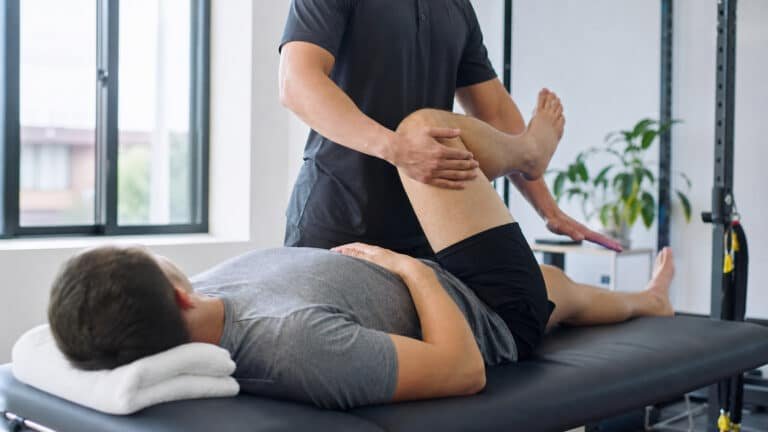
For range of motion specifically, we use assisted stretching, where a therapist moves your joint through range while you stay relaxed. Your nervous system doesn’t fight an assisted stretch the way it fights a self-stretch, so you tend to get further in one session than weeks of stretching alone. We wrote more about how that works for stubborn hip tightness in stretching for tight hips.
What to Expect During Your First Visit
Your first visit runs about 30 to 45 minutes. Dr. Patel takes a history, asking when the tightness started, what makes it better or worse, and whether it’s tied to a specific activity. Then a hands-on exam checks joint mobility, muscle length, and whether the tight area is the actual source or just where you feel it.
If imaging is warranted, we can take digital X-rays on site the same visit. From there you get a plan. Sometimes that’s an adjustment plus a specific home stretching routine. Sometimes it’s assisted stretching sessions scheduled a few weeks apart. Every plan is different because every “tight” muscle has a different actual cause.
Safe Technique You Can Use at Home
Both tools are useful. Neither is safe to do carelessly. Here’s how to use each one without making things worse.
How to Foam Roll Without Overdoing It
- Go slow. Roll at about one inch per second. Fast rolling doesn’t give the tissue time to respond and just irritates the area.
- Cap it at 30 to 60 seconds per muscle group. Longer isn’t better here. More time just means more irritation on an area that’s already inflamed.
- Avoid rolling directly over a joint, bone, or anything that produces sharp or shooting pain. A dull ache is normal. Sharp pain means stop.
- Skip a spot entirely if there’s a bruise, a varicose vein, or a recent injury there.
- Use it before activity for mobility, or right after for soreness. Don’t lean on it as your only recovery tool.
How to Stretch Without Wasting Your Time
- Hold each static stretch 30 seconds, repeat 2 to 3 times, and save your longer holds for after activity, not right before a heavy set.
- Move into mild tension, never pain. Sharp or shooting pain radiating down a limb means nerve involvement, not a normal stretch, so stop.
- Consistency beats intensity. Five minutes daily for a month does more than one 30-minute session ever will.
- Pair it with strengthening the weak link. A muscle that’s tight because it’s compensating for a weak neighbor just tightens back up unless you load that weak area too.
Foam Rolling vs Stretching: When It’s Not Enough
Some tightness isn’t a rolling-and-stretching problem at all. See a doctor or come in for an exam if you notice:
- Tightness that hasn’t budged after 2 to 3 weeks of consistent home care.
- Numbness, tingling, or weakness anywhere down the arm or leg.
- Tightness that’s worse at night or wakes you up from sleep.
- A calf that’s tight, swollen, or warm on one side only. That combination needs same-day medical evaluation to rule out a blood clot, not a foam roller.
- Tightness that started with a specific fall, collision, or sudden pop.
A chiropractic exam can tell the difference between muscle that’s genuinely overworked and tightness that’s actually coming from a joint, a disc, or a nerve. That distinction changes the whole treatment plan.
Frequently Asked Questions
Is foam rolling better before or after a workout?
Both have a place. Before activity it’s a low-cost way to increase mobility without the strength dip that long static stretches can cause. After activity it takes the edge off soreness. Skip it as your only warm-up, though. Pair it with dynamic movement.
Can stretching make tight muscles worse?
Yes, if the muscle is bracing for an unstable joint. Stretching a muscle that’s protecting something just removes the protection without fixing the instability, which can leave you feeling worse or even more guarded afterward.
How long does it take for foam rolling to work?
You’ll usually feel a difference within a minute or two of rolling a spot, but that relief typically fades within 10 to 20 minutes unless you follow it with movement or stretching to reinforce the new range.
Should I stretch a strained muscle?
Not aggressively, and not in the first few days. Gentle, pain-free range of motion is fine. Pushing a stretch on an acute strain can reinjure the tissue. If you’re not sure whether it’s a strain or normal tightness, get it checked before you stretch it hard.
Is it normal for a muscle to feel tight all the time?
No. Occasional tightness after a hard workout or a long day at a desk is normal. Constant tightness in the same spot, especially if foam rolling and stretching stopped helping, usually points to something upstream that needs an exam.
Do I need a foam roller if I already stretch?
Not necessarily. They solve different problems. If your main goal is long-term flexibility, consistent stretching gets you there on its own. A roller is more useful for quick pre-workout mobility or taking the edge off soreness.
Ready to find relief? Schedule an appointment online or visit us at Brooklyn Chiropractic Care, 112 Greenpoint Ave. STE 1B, Brooklyn, NY 11222.
References
- Konrad A, et al. Static Stretch Training versus Foam Rolling Training Effects on Range of Motion: A Systematic Review and Meta-Analysis. Sports Medicine. 2024. pubmed.ncbi.nlm.nih.gov/38760635
- Cheatham SW, Kolber MJ, Cain M, Lee M. The Effects of Self-Myofascial Release Using a Foam Roll or Roller Massager on Joint Range of Motion, Muscle Recovery, and Performance: A Systematic Review. International Journal of Sports Physical Therapy. 2015;10(6):827-838. pubmed.ncbi.nlm.nih.gov/26618062
- Behm DG, Blazevich AJ, Kay AD, McHugh M. Acute effects of muscle stretching on physical performance, range of motion, and injury incidence in healthy active individuals: a systematic review. Applied Physiology, Nutrition, and Metabolism. 2016;41(1):1-11. doi:10.1139/apnm-2015-0235
Not Sure What's Causing Your Pain?
Take our 60-second pain assessment and get a personalized care recommendation from Dr. Patel.
Take the Assessment