(347) 625-1246
 hello@brooklynchirocare.com
 112 Greenpoint Ave #1B, Brooklyn, NY 11222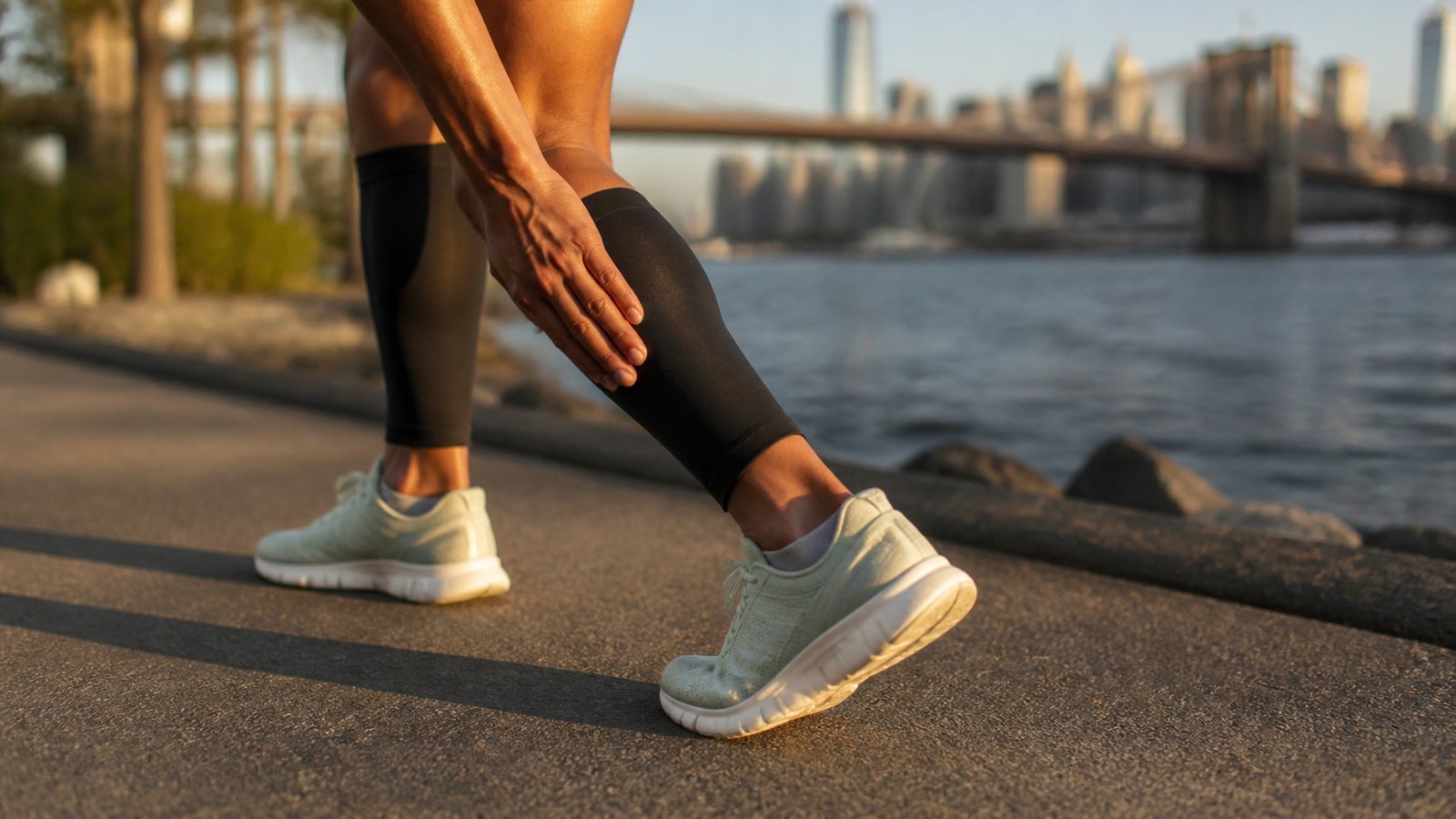
Shin splints in Brooklyn show up every year around the same time, right when marathon training ramps up along the Greenpoint waterfront and the loop around McCarren Park gets busy again. The ache sits along the inside edge of your shin bone. Worse at the start of a run, sometimes worse the next morning. Most of the time it’s medial tibial stress syndrome, a bone and connective tissue overload injury, not an actual fracture. But the two can feel similar early on, and telling them apart matters more than most runners realize.
Key Takeaways
- Shin splints, medically called medial tibial stress syndrome (MTSS), come from repeated tibial loading outpacing the bone’s ability to remodel. It’s not about “weak shins.”
- A sudden jump in weekly mileage, more than 30% in a short stretch, is one of the strongest predictors researchers have identified.
- Tenderness spread over several inches along the shin usually points to MTSS. A tight, pinpoint sore spot raises concern for a stress fracture instead.
- Training-load changes and targeted strengthening are the backbone of recovery, not stretching alone.
- Radial shockwave is sometimes added for MTSS that isn’t responding to rehab, but only after a stress fracture and other bone-stress red flags have been ruled out.
In This Article
- What Is Medial Tibial Stress Syndrome?
- What Causes Shin Splints in Brooklyn Runners?
- Shin Splints or Stress Fracture? How to Tell the Difference
- How Dr. Patel Evaluates and Treats Shin Splints
- Radial Shockwave for Persistent Medial Tibial Stress Syndrome
- What to Expect During Your First Visit
- Home Care: Training-Load Fixes While You Recover
- Shin Splints in Brooklyn: When to See a Doctor
- FAQ
What Is Medial Tibial Stress Syndrome?
Medial tibial stress syndrome is inflammation and micro-stress along the posteromedial border of the tibia, the inside edge of your shin bone, where muscle and connective tissue attach and pull on the bone with every stride. Run enough miles on it without adequate recovery and the bone can’t remodel fast enough to keep up. That’s the injury in one sentence [1].
It sits on a spectrum. Mild cases are soreness that fades once you’re warmed up. Left alone and pushed through, the same overload pattern can progress toward a stress reaction and eventually a true stress fracture. That’s the real reason this condition gets taken seriously instead of shrugged off as “just shin splints.”
And it’s common. Some estimates put MTSS incidence as high as a third of runners and military recruits during heavy training blocks [2]. If you’ve felt it, you’re not dealing with something rare or strange. You’re dealing with one of the most predictable overuse injuries in distance running.
What Causes Shin Splints in Brooklyn Runners?
Training load is the biggest driver of shin splints in Brooklyn runners, more than shoe choice, more than the concrete under your feet. A meta-analysis of MTSS risk factors found that increased weekly mileage, running frequency, and running speed all independently raised risk, along with a higher body mass index [3].
- Rapid mileage increases. Bumping weekly volume up more than 30% in a short window is one of the clearest predictors in the research. Marathon training plans that front-load big jumps are a common culprit we see.
- Worn-out or wrong-for-you footwear. Shoes that have lost their cushioning, or a shoe swap that changes your stride mechanics overnight, shift load onto the tibia differently than what it’s adapted to.
- Hard, unforgiving surfaces on repeat. Brooklyn sidewalks and the paved loop at McCarren Park are less forgiving than trail or track, and doing every run on concrete adds up.
- Foot mechanics. A higher navicular drop (more collapse of the arch under load) and overpronation both increase strain along the inside of the shin with each footstrike [4].
- Weak hip and calf muscles. When the muscles that should absorb shock and control the lower leg fatigue early, more force transfers straight to the bone.
- A prior running injury. Once you’ve had MTSS, you’re statistically more likely to get it again, especially if the underlying training pattern that caused it hasn’t changed.
None of these causes are your fault exactly. Most runners don’t know their mileage jumped 40% until someone points it out on paper.
Shin Splints or Stress Fracture? How to Tell the Difference
This is the part that actually matters for how you treat it. MTSS and a tibial stress fracture sit on the same injury continuum, and clinical exam findings help sort out which one you’ve got before imaging is even needed [5].
Tenderness pattern. MTSS tenderness typically spreads along a stretch of bone, often 5 centimeters or more along the shin. A stress fracture tends to hurt in one specific spot you could cover with a fingertip.
Pain behavior. Shin splints often ease up once you’re warmed up into a run, then ache again afterward. A stress fracture is the opposite story. It tends to hurt progressively worse the longer you run, and it doesn’t calm down with a warm-up the way MTSS does.
The hop test. Hopping on the affected leg is genuinely useful here. Someone with MTSS can usually hop repeatedly without much trouble. A true stress fracture makes hopping sharply, immediately painful. Clinicians use this as a quick screening tool precisely because it discriminates so well between the two [5].
Night pain. Pain that wakes you up, or that’s present at rest with no activity involved, is a stress fracture red flag. MTSS is almost always activity-related.
Here’s the thing about x-rays early on: they’re often normal even with a real stress fracture, because the bone changes haven’t shown up on plain film yet. MRI is far more sensitive for catching this early, which is why Dr. Patel refers out for imaging when the exam pattern doesn’t fit clean MTSS.
How Dr. Patel Evaluates and Treats Shin Splints
The evaluation starts with your training log, not just your shin. How many miles a week, how that’s changed recently, what shoes you’re in, what surfaces you’re running on. That history usually tells Dr. Patel more than the exam alone.
From there it’s a hands-on exam: palpating the length and location of tenderness, checking ankle and hip mobility, assessing calf and hip strength, and running the hop test and other screens that help separate MTSS from a possible stress fracture. In our Greenpoint clinic, this same sequence gets run on nearly every runner who comes in with shin pain, because guessing from the outside isn’t good enough.
If the picture fits MTSS, treatment centers on load management first. That means adjusting your training plan, not necessarily stopping running altogether, plus manual therapy to the calf and surrounding soft tissue, and a graded strengthening program targeting the muscles that support the tibia. If the exam or your symptoms point toward a stress fracture, you’ll get referred for imaging before any return-to-running plan gets built.
A common mistake we see is runners stretching the calf obsessively and calling it treatment. Stretching alone doesn’t address the training-load problem that caused the overload in the first place [1].
Radial Shockwave for Persistent Medial Tibial Stress Syndrome
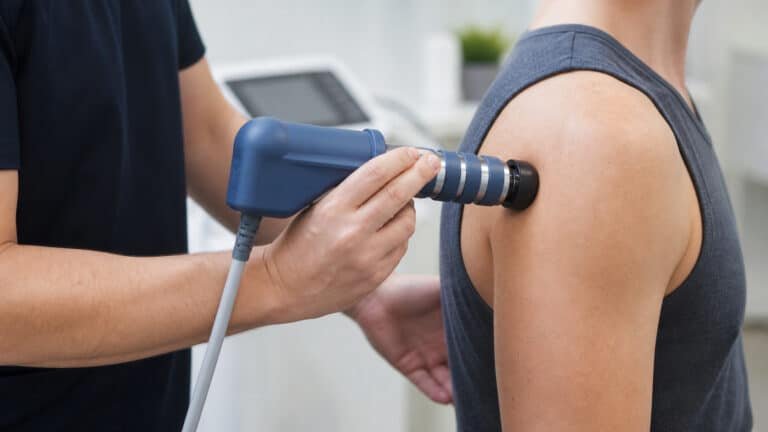
Once a stress fracture and other bone-stress red flags are ruled out, radial shockwave therapy is one option Dr. Patel may discuss for medial tibial stress syndrome that isn’t settling down with load management and exercise-based rehab alone. It’s an adjunct, not a replacement for fixing the training error that caused the injury.
The evidence here is genuinely mixed, and it’s worth being straight about that. A single-blind randomized controlled trial in military cadets found that one session of focused shockwave combined with a specific exercise program sped up clinical and functional recovery compared to exercise alone [6]. A separate randomized, sham-controlled pilot trial in active adults found no significant difference between real and sham shockwave for pain or pain-free running distance [7].
What that tells us: shockwave paired with an active exercise program has shown benefit in at least one solid trial, but it’s not a guaranteed fix on its own, and results vary between studies. Dr. Patel presents it as a possible adjunct for stubborn, persistent cases, not a first-line treatment and not a shortcut around load management.
You can read more about how sessions work on our radial shockwave therapy service page. If shockwave comes up for your case, it’ll be after an exam that’s already excluded a stress fracture, and as one piece of a broader recovery plan, not the whole plan.
What to Expect During Your First Visit
Your first visit runs about 45 minutes to an hour. It starts with a conversation about your training, your mileage history, when the pain started, and what you’ve already tried.
Next is the physical exam covering the shin itself, your ankle and hip mobility, and strength testing for the muscles that support the lower leg. Dr. Patel will also check your gait and footwear if it’s relevant to how you’re loading the shin.
If imaging looks necessary based on the exam, you’ll get a referral before any hands-on plan is finalized. If MTSS fits the picture, you’ll leave with a working diagnosis, a modified training plan, and a home program built around your actual mileage goals, whether that’s finishing a fall race or just getting back to pain-free running.
Home Care: Training-Load Fixes While You Recover
Dr. Patel frequently tells runners that home care without a training-load fix just delays the same injury a few weeks. These steps work alongside a plan, not instead of one.
- Cut mileage by 20 to 30 percent for two to three weeks. Not to zero necessarily, just enough to let the bone catch up. Complete rest often isn’t needed for mild MTSS, but ignoring the overload isn’t an option either.
- Swap one or two runs a week for cross-training that doesn’t load the tibia the same way. Cycling, swimming, or the elliptical keep your cardio fitness up while your shin settles down.
- Ice after activity, 15 minutes at a time, if it flares up post-run. It won’t fix the underlying issue, but it takes the edge off.
- Add calf raises and hip strengthening three times a week. Weak hip abductors and a weak calf complex both show up repeatedly in the research on MTSS risk [3][4]. Two sets of 15 slow calf raises, plus side-lying hip work, is a reasonable starting point.
- Rebuild mileage gradually once you’re pain-free. Aim for no more than a 10% weekly increase when you return, and don’t stack a mileage jump with a surface change or new shoes in the same week.
Shin Splints in Brooklyn: When to See a Doctor
Most cases of shin splints in Brooklyn respond well to load management and don’t need urgent care. Get evaluated promptly if you notice any of these:
- Pain focused in one specific pinpoint spot rather than spread along the shin.
- Pain that gets progressively worse the longer you run, instead of easing with a warm-up.
- Pain at rest or at night with no activity involved.
- Hopping on the affected leg causes sharp, immediate pain.
- Visible swelling, warmth, or a shin that’s tender to the touch even when you’re not running.
- Symptoms that haven’t improved after two to three weeks of reduced mileage and home care.
Any of those patterns need an exam and likely imaging before you keep training on it. Running through a real stress fracture risks a much longer layoff than addressing it early. See our full guide to runner’s knee versus a meniscus tear if your pain is actually higher up, or check out how Dr. Patel approaches sports chiropractic care for training-related injuries generally.
Frequently Asked Questions
How long do shin splints take to heal?
Mild cases often improve within two to four weeks once training load is adjusted. More stubborn cases can take two to three months, especially if the training pattern that caused the injury isn’t corrected alongside treatment.
Can I keep running with shin splints?
Often yes, at a reduced volume, as long as pain stays mild and doesn’t worsen during the run. If pain is sharp, focal, or getting worse as you run, stop and get evaluated before continuing.
Are shin splints the same thing as a stress fracture?
No. Shin splints, medial tibial stress syndrome, involve diffuse tenderness along the bone without a structural break. A stress fracture is an actual crack in the bone and needs a different, more conservative recovery timeline.
Does shockwave therapy help shin splints?
The evidence is mixed. One randomized trial found shockwave plus exercise sped up recovery compared to exercise alone, while a separate sham-controlled trial found no significant benefit over placebo. Dr. Patel may discuss it as an adjunct for persistent cases after a stress fracture is ruled out, not as a guaranteed fix.
What shoes help with shin splints?
Shoes with adequate cushioning that match your gait matter more than any specific brand. If your current pair has high mileage on it, or you recently switched styles right before symptoms started, that’s worth addressing alongside your training plan.
Is stretching enough to fix shin splints?
Not on its own. Stretching the calf can help with comfort, but it doesn’t address the training-load overload or the strength deficits that usually caused the injury in the first place.
Ready to find relief? Schedule an appointment online or visit us at Brooklyn Chiropractic Care, 112 Greenpoint Ave. STE 1B, Brooklyn, NY 11222.
References
- Medial Tibial Stress Syndrome. StatPearls. NCBI Bookshelf NBK538479.
- Medial Tibial Stress Syndrome in Novice and Recreational Runners: A Systematic Review. PMC7602098.
- Newman P, Witchalls J, Waddington G, Adams R. Risk factors associated with medial tibial stress syndrome in runners: a systematic review and meta-analysis. Open Access J Sports Med. 2013. PubMed 24379729.
- Medial Tibial Stress Syndrome: A Scoping Review of Epidemiology, Biomechanics, and Risk Factors. PMC11958822.
- Medial tibial stress fracture diagnosis and treatment guidelines, including hop test and tenderness-length differentiation from MTSS. NCBI Bookshelf NBK538479.
- Moen MH, et al. Shockwave treatment for medial tibial stress syndrome in military cadets: A single-blind randomized controlled trial. J Sci Med Sport. 2017. PubMed 28882773.
- Newman P, Waddington G, Adams R. Shockwave treatment for medial tibial stress syndrome: a randomized double blind sham-controlled pilot trial. J Sci Med Sport. 2017. PubMed 27640922.
Not Sure What's Causing Your Pain?
Take our 60-second pain assessment and get a personalized care recommendation from Dr. Patel.
Take the Assessment