(347) 625-1246
 hello@brooklynchirocare.com
 112 Greenpoint Ave #1B, Brooklyn, NY 11222
You’ve been dealing with back pain for weeks, maybe months. You’ve tried stretching, ice packs, maybe a YouTube yoga routine. Nothing’s sticking. Now you’re Googling “chiropractor for back pain Brooklyn” at 11 p.m. and wondering which clinic is actually worth your time.
That’s the exact situation most of our patients describe when they first walk into our Greenpoint office. And the honest answer is: the best chiropractor for your back pain depends on what’s causing it, how long you’ve had it, and how thoroughly the provider evaluates you before starting treatment.
This guide breaks down everything you need to know, from the different types of back pain to what treatment actually looks like, realistic recovery timelines, and red flags that mean you should skip the chiropractor and head straight to the ER.
Key Takeaways
- Back pain has three main categories (muscular, disc-related, nerve-related), and each one requires a different treatment approach.
- A proper evaluation includes a physical exam, movement testing, and often spinal X-rays before any adjustment happens.
- Recovery timelines range from 2 to 4 weeks for muscle strains up to 8 to 12 weeks for disc injuries.
- Certain symptoms like loss of bladder control, sudden leg weakness, or fever with back pain require emergency medical attention, not chiropractic care.
- A good chiropractor for back pain in Brooklyn won’t just crack your back. They’ll build a plan around your specific diagnosis.
The Three Types of Back Pain (and Why It Matters Which One You Have)
Not all back pain is the same. That sounds obvious, but you’d be surprised how many clinics treat every patient with the same cookie-cutter adjustment. The type of pain you’re experiencing changes everything about how it should be treated.
Muscular Back Pain
This is the most common type we see. You lifted something heavy, slept in a weird position, or spent ten hours hunched over a laptop. The muscles in your lower or mid-back are strained, inflamed, and angry. It usually feels like a dull ache that gets worse with movement.
Muscular pain responds well to soft tissue therapy, gentle adjustments, and targeted rehab exercises. Most patients feel significant relief within 2 to 4 weeks.
Disc-Related Back Pain
A herniated or bulging disc puts pressure on surrounding nerves, creating a sharper, more localized pain. You might feel it deep in your lower back, and it often gets worse when you bend forward or sit for long periods. Some patients describe a burning sensation or a feeling of instability in the spine.
Disc injuries need a more careful approach. We typically use spinal decompression therapy, specific positioning techniques, and a gradual return to movement. Recovery takes longer, usually 6 to 12 weeks depending on severity.
Nerve-Related Back Pain
Sciatica is the classic example. A compressed nerve sends shooting pain, tingling, or numbness down your leg. Sometimes you’ll feel it in your buttock, the back of your thigh, or all the way to your foot.
Nerve pain requires precise adjustments to take pressure off the affected nerve root. We often combine chiropractic adjustments with decompression and corrective exercises that create more space in the spinal canal. Timeline varies, but most sciatica cases improve meaningfully within 4 to 8 weeks.
Dr. Patel frequently tells patients: “The diagnosis drives the treatment plan. If someone starts adjusting you without figuring out what’s actually wrong, that’s a red flag.”
What a Back Pain Evaluation Looks Like at Our Clinic
So what happens when you actually show up to see a chiropractor for back pain in Brooklyn? Here’s what to expect at your first visit.
Health History and Symptom Review
We start by talking. How long have you had the pain? Where exactly do you feel it? Does it radiate? What makes it better or worse? Have you had any imaging done? We need the full picture before we touch your spine.
Physical Exam and Movement Testing
Next comes the hands-on portion. We’ll test your range of motion, check for muscle tightness and weakness, assess your posture, and run orthopedic tests that help pinpoint whether the problem is muscular, disc-related, or nerve-related. In our Greenpoint clinic, we use a combination of palpation, neurological screening, and functional movement assessment.
X-rays When Needed
Not every patient needs imaging, but many do. If we suspect a structural issue, disc problem, or spinal misalignment, we’ll take on-site X-rays the same day. This lets us see exactly what’s going on with your vertebrae, disc spaces, and overall spinal alignment before creating your treatment plan.
Diagnosis and Treatment Plan
Once we’ve gathered all the information, we sit down with you and explain what we found. No medical jargon, no vague answers. You’ll know exactly what’s causing your pain, what we recommend, how long treatment should take, and what results to expect.
One pattern we notice with patients who’ve been to other providers first: they were never given a clear diagnosis. They were told “your back is tight” and given a quick adjustment. That’s not how we work.
Treatment Options for Back Pain at Brooklyn Chiropractic Care
A good chiropractor for back pain in Brooklyn should offer more than one tool. Here’s what we use and when each one applies.
Chiropractic Adjustments
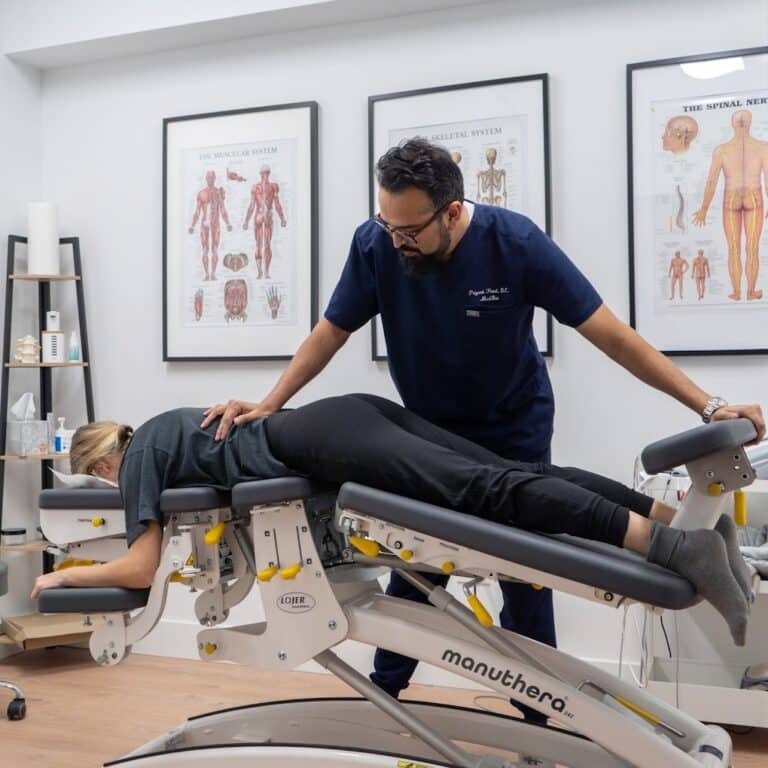
This is the foundation. A spinal adjustment restores proper alignment, reduces joint restriction, and takes mechanical pressure off nerves and discs. We use both manual adjustments and instrument-assisted techniques depending on your comfort level and condition.
For acute muscle strain, adjustments can provide near-immediate relief. For disc and nerve issues, they’re part of a longer treatment sequence.
Spinal Decompression
Decompression therapy gently stretches the spine to create negative pressure within the disc. This encourages a bulging or herniated disc to retract and allows nutrient-rich fluid to flow back into the disc space. It’s one of the most effective non-surgical treatments for disc-related back pain.
Sessions typically last 15 to 20 minutes. Most patients need 10 to 15 sessions spread over several weeks.
Shockwave Therapy
Extracorporeal shockwave therapy (ESWT) uses acoustic waves to break up scar tissue, increase blood flow, and stimulate healing in damaged soft tissue. We use it for chronic muscle pain, stubborn trigger points, and cases where inflammation isn’t responding to manual therapy alone.
It’s not comfortable during the session, but the results can be dramatic. Many patients notice improvement after just 3 to 4 treatments.
Rehab Exercises and Corrective Movement
Adjustments fix the alignment. Exercises keep it that way. We prescribe specific stretches and strengthening routines tailored to your condition. Core stabilization, hip mobility work, and postural correction drills are the most common prescriptions for back pain patients.
You’ll get a take-home program with clear instructions. We update it as you progress.
Realistic Recovery Timelines by Condition
How fast does chiropractic care work for back pain? It depends on what’s wrong. Here are the general timelines we see in practice.
- Acute muscle strain: 2 to 4 weeks. Most patients feel 60 to 70 percent better after the first week of treatment. Full resolution usually takes 3 to 4 visits.
- Chronic muscle tension (months of symptoms): 4 to 6 weeks. Longer-standing issues need more time because the muscles have adapted to dysfunctional patterns.
- Herniated or bulging disc: 6 to 12 weeks. Disc tissue heals slowly. Consistency with treatment and home exercises is critical.
- Sciatica: 4 to 8 weeks. Nerve symptoms can fluctuate early in treatment. Improvement often comes in waves rather than a steady line.
- Degenerative disc disease: Ongoing management. We can’t reverse degeneration, but we can reduce pain, improve mobility, and slow progression through regular maintenance care.
These are averages. Your timeline could be shorter or longer depending on age, activity level, how long you’ve had symptoms, and how closely you follow the treatment plan.
Red Flags: When Back Pain Needs Emergency Care
Most back pain isn’t dangerous. But certain symptoms signal something more serious, and a chiropractor for back pain in Brooklyn (or anywhere else) should never be your first call in these situations.
Go to the emergency room if you experience any of the following with your back pain:
- Loss of bladder or bowel control. This can indicate cauda equina syndrome, a surgical emergency.
- Sudden weakness in one or both legs. Progressive neurological loss requires immediate medical evaluation.
- Fever above 101°F with back pain. This combination can indicate a spinal infection.
- Back pain after a serious fall or accident. Fractures need imaging before any manual treatment.
- Unexplained weight loss combined with constant back pain. Rarely, this pattern can indicate a more serious underlying condition that needs ruling out.
If none of those apply to you, chiropractic care is one of the safest and most effective options for back pain relief.
Prevention Tips for Brooklyn Desk Workers
If you work from home or commute to an office in Brooklyn, you’re spending a lot of time sitting. Here’s how to protect your back between visits.
- Stand up every 30 minutes. Set a timer on your phone. Even 60 seconds of walking or stretching resets your spinal loading.
- Check your monitor height. The top of your screen should be at eye level. If you’re working on a laptop, get a separate keyboard and raise the screen.
- Strengthen your core, not just your abs. Planks, bird-dogs, and dead bugs build the deep stabilizer muscles that protect your spine. Three sets, three times per week.
- Watch how you sit on the subway. Slouching on the L train for 40 minutes does real damage over time. Sit with your back against the seat and your feet flat on the floor.
- Invest in your sleep position. Side sleepers, put a pillow between your knees. Back sleepers, put one under your knees. Stomach sleeping is the worst position for your lower back.
Small changes add up. The patients who get the best long-term results are the ones who take their home care seriously.
How to Choose the Right Chiropractor for Back Pain in Brooklyn
Not every chiropractor is the right fit for every patient. Here’s what to look for when you’re comparing options.
- They do a real exam first. Any chiropractor who adjusts you on the first visit without an examination is cutting corners.
- They explain your diagnosis in plain language. You should leave your first visit understanding exactly what’s wrong and what the plan is.
- They use more than one treatment method. Adjustments alone aren’t enough for most conditions. Look for a clinic that offers rehab, decompression, soft tissue work, or other modalities.
- They set clear expectations. A good chiropractor for back pain in Brooklyn will tell you how many visits you’ll likely need and what outcomes are realistic.
- They have real patient reviews. Check Google reviews. Look for specific mentions of back pain treatment and results, not just generic “great experience” comments.
Frequently Asked Questions
Should I see a chiropractor or orthopedist for back pain?
Start with a chiropractor if your pain is musculoskeletal, meaning it came from a strain, poor posture, or a disc issue without severe neurological symptoms. Chiropractors can diagnose the problem, take X-rays, and provide hands-on treatment. If surgery becomes a consideration or if your symptoms include progressive weakness, your chiropractor for back pain in Brooklyn should refer you to an orthopedist. At our clinic, we maintain relationships with local orthopedic specialists for exactly these situations.
How fast does chiropractic work for back pain?
It depends on the cause. Simple muscle strains often improve within the first 1 to 2 visits. Disc injuries and sciatica take longer, typically 4 to 12 weeks of consistent treatment. Most patients feel some improvement after their first session, but lasting resolution requires a full treatment course. Skipping visits or stopping early because you feel better is the most common reason people relapse.
Can a chiropractor fix a herniated disc?
Chiropractors can’t “fix” a herniated disc in the sense of pushing it back into place. But we can reduce the symptoms and support the body’s natural healing process. Through spinal decompression, targeted adjustments, and corrective exercises, many disc herniations improve significantly without surgery. Studies show that about 90% of disc herniations resolve with conservative care.
How many visits will I need for back pain?
There’s no universal answer, but here’s a general framework. Acute muscle pain: 4 to 6 visits over 2 to 3 weeks. Disc injuries: 12 to 20 visits over 6 to 12 weeks. Chronic conditions: an initial treatment phase followed by periodic maintenance visits. We reassess at regular intervals and adjust the plan as you improve.
Is chiropractic care safe for back pain?
Yes. Chiropractic care is one of the safest treatment options for musculoskeletal back pain. Serious complications are extremely rare. The American College of Physicians recommends spinal manipulation as a first-line treatment for acute and chronic low back pain before considering medication or surgery. That said, a proper evaluation is non-negotiable. We screen every patient for contraindications before treatment begins.
Do I need a referral to see a chiropractor in Brooklyn?
No. In New York State, chiropractors are primary care providers for musculoskeletal conditions. You don’t need a referral from your primary care doctor, and you can book directly. Most insurance plans cover chiropractic care, and we accept a wide range of plans at our clinic.
Ready to find relief? Schedule an appointment online or visit us at Brooklyn Chiropractic Care, 112 Greenpoint Ave. STE 1B, Brooklyn, NY 11222.
References
- Qaseem A, Wilt TJ, McLean RM, Forciea MA. Noninvasive Treatments for Acute, Subacute, and Chronic Low Back Pain: A Clinical Practice Guideline from the American College of Physicians. Annals of Internal Medicine. 2017;166(7):514-530.
- Kreiner DS, Hwang SW, Easa JE, et al. An evidence-based clinical guideline for the diagnosis and treatment of lumbar disc herniation with radiculopathy. The Spine Journal. 2014;14(1):180-191.
- Paige NM, Miake-Lye IM, Booth MS, et al. Association of Spinal Manipulative Therapy with Clinical Benefit and Harm for Acute Low Back Pain: Systematic Review and Meta-analysis. JAMA. 2017;317(14):1451-1460.
- Chou R, Deyo R, Friedly J, et al. Nonpharmacologic Therapies for Low Back Pain: A Systematic Review for an American College of Physicians Clinical Practice Guideline. Annals of Internal Medicine. 2017;166(7):493-505.
Not Sure What's Causing Your Pain?
Take our 60-second pain assessment and get a personalized care recommendation from Dr. Patel.
Take the Assessment